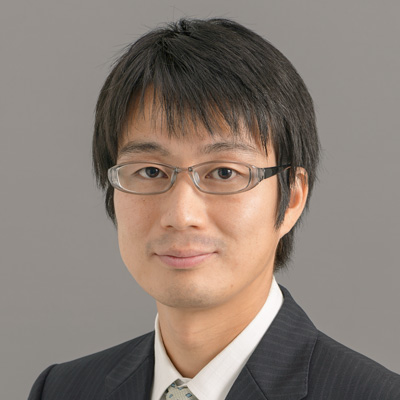
Fujiwara, Kei

写真a

Affiliation

Faculty of Science and Technology, Department of Biosciences and Informatics ( Yagami )

Position

Associate Professor

Related Websites

External Links

Profile 【 Display / hide

  • Disrupted cells won't go back into its living states. We are trying to clarify why this process is irreversible and developing a method to reconstruct living cells from biomolecules mixtures using artificial cells engineering.

Career 【 Display / hide

  • 2009.04
    -
    2010.03

    The university of Tokyo, Graduate School of Frontier Sciences, Department of Medical Genome Sciences, JSPS research associate

  • 2010.04
    -
    2011.03

    Kyoto university, Institute for Integrated Cell-Material Sciences, Research Associate

  • 2011.04
    -
    2014.03

    Tohoku University, Department of Bioengineering and Robotics, JSPS research associate

Academic Background 【 Display / hide

  • 2004.04
    -
    2006.03

    The University of Tokyo, Graduate School of Agricultural and Life Sciences, Department of Applied Biological Chemistry

    Graduate School, Completed, Master's course

  • 2006.04
    -
    2009.03

    The University of Tokyo, Graduate School of Frontier Sciences, Department of Medical Genome Sciences

    Graduate School, Completed, Doctoral course

Academic Degrees 【 Display / hide

  • 博士(生命科学), The University of Tokyo, Coursework, 2009.03

    シャペロニンGroEL/ESの細胞内における役割の解明


Research Areas 【 Display / hide

  • Life Science / Molecular biology

  • Life Science / Biophysics

  • Life Science / System genome science

Research Keywords 【 Display / hide

  • Artificial-Cell engineering

  • Synthetic Biology

  • Bacteriology

  • Cell-free Life Sciences


Books 【 Display / hide

display all >>

Papers 【 Display / hide

  • Mirror life at the crossroads: Report on the symposia in Japan for discussion toward mirror life synthesis

    Fujiwara K., Aoki W., Furusawa C., Hasegawa A., Hayashi G., Kiga D., Mikami K., Takada S., Shimizu Y.

    Biophysics and Physicobiology 23 ( 1 )  2026

     View Summary

    The synthesis of mirror life, an organism composed entirely of the mirror-image counterparts of naturally occurring biomolecules, may be a topic for science fiction today but is suggested to be a reality in the future. Scientists called for strict preemptive regulation for the synthesis of mirror life due to concerns regarding biosecurity risks, such as the potential threat of mirror life to humans and non-human ecosystems. This perspective reports on the discussions held at two recent symposia in Japan, at the Japanese Society for Cell Synthesis Research (JSCSR) meeting and at the Biophysical Society of Japan (BSJ) annual meeting. Participants, including synthetic biologists, social scientists and artists, discussed the feasibility of the synthesis of mirror-image artificial self-replicating cells and the balance between the risks and benefits of this emerging technology. The discussions indicate that, while safety management is essential, a rational, evidence-based framework developed through open dialogue with society is crucial for the responsible advancement of mirror life research.

  • Beyond Simplifications: Overlooked Physics of Macromolecular Behaviors in Living Cells

    Yanagisawa M., Fujiwara K.

    Macromolecules 58 ( 18 ) 9557 - 9566 2025.09

    ISSN  00249297

     View Summary

    Simplifications are key to understanding the complex physical behaviors of biomacromolecules within living cells. However, in cell-sized spaces─micrometer-scale compartments enclosed by lipid membranes─the molecular organization, phase behavior, and reaction dynamics are influenced by confinement, high molecular concentrations, and membrane interfacial effects. Studies have shown that these factors, which are often overlooked or ignored during simplification, are critical for deducing the physics of intracellular processes. This perspective highlights the recent findings on the molecular behaviors of cell-sized spaces and emphasizes the need to consider cell-sized space effects, molecular diversity, and nonequilibrium dynamics to elucidate the physics of living cells. A deeper understanding of these fundamental principles bridges the gap between molecular biology and physics. In addition, it will refine our understanding of cellular organization, inspire developments in biomaterials, and contribute to polymer science.

  • STALL-seq: mRNA-display selection of bacterial and eukaryotic translational arrest sequences from large random-sequence libraries

    Hamano T., Nagumo Y., Umehara T., Hirono K., Fujiwara K., Taguchi H., Chadani Y., Doi N.

    Journal of Biological Chemistry 300 ( 12 )  2024.12

    ISSN  00219258

     View Summary

    The translational arrest is a phenomenon wherein a temporary pause or slowing of the translation elongation reaction occurs due to the interaction between ribosome and nascent peptide. Recent studies have revealed that translational arrest peptides are involved in intracellular protein homeostasis regulatory functions, such as gene expression regulation at the translational level and regulation of cotranslational protein folding. Herein, we established a method for the large-scale in vitro selection of translational arrest peptides from DNA libraries by combining a modified mRNA display method and deep sequencing. We performed in vitro selection of translational arrest sequences from random-sequence libraries via mRNA display based on the Escherichia coli PURE system or wheat germ extract. Following several rounds of affinity selection, we obtained various candidate sequences that were not similar to known arrest peptides and subsequently confirmed their ribosome stalling activity by peptidyl-tRNA detection and toeprinting assay. Following the site-directed mutagenesis of the selected sequences, these clones were found to contain novel arrest peptide motifs. This method, termed STALL-seq (Selection of Translational Arrest sequences from Large Library sequencing), could be useful for the large-scale investigation of translational arrest sequences acting on both bacterial and eukaryotic ribosomes and could help discover novel intracellular regulatory mechanisms.

  • Cell-Free Protein Expression by a Reconstituted Transcription–Translation System Energized by Sugar Catabolism

    Sato G., Miyazawa S., Doi N., Fujiwara K.

    Molecules 29 ( 13 )  2024.07

     View Summary

    Cooperation between catabolism and anabolism is crucial for maintaining homeostasis in living cells. The most fundamental systems for catabolism and anabolism are the glycolysis of sugars and the transcription–translation (TX-TL) of DNA, respectively. Despite their importance in living cells, the in vitro reconstitution of their cooperation through purified factors has not been achieved, which hinders the elucidation of the design principle in living cells. Here, we reconstituted glycolysis using sugars and integrated it with the PURE system, a commercial in vitro TX-TL kit composed of purified factors. By optimizing key parameters, such as glucokinase and initial phosphate concentrations, we determined suitable conditions for their cooperation. The optimized system showed protein synthesis at up to 33% of that of the original PURE system. We observed that ATP consumption in upstream glycolysis inhibits TX-TL and that this inhibition can be alleviated by the co-addition of glycolytic intermediates, such as glyceraldehyde 3-phosphate, with glucose. Moreover, the system developed here simultaneously synthesizes a subset of its own enzymes, that is, glycolytic enzymes, in a single test tube, which is a necessary step toward self-replication. As glycolysis and TX-TL provide building blocks for constructing cells, the integrated system can be a fundamental material for reconstituting living cells from purified factors.

  • Metabolic Tug-of-War between Glycolysis and Translation Revealed by Biochemical Reconstitution

    Sato G., Kinoshita S., Yamada T.G., Arai S., Kitaguchi T., Funahashi A., Doi N., Fujiwara K.

    ACS Synthetic Biology (ACS Synthetic Biology)  13 ( 5 ) 1572 - 1581 2024.05

     View Summary

    Inside cells, various biological systems work cooperatively for homeostasis and self-replication. These systems do not work independently as they compete for shared elements like ATP and NADH. However, it has been believed that such competition is not a problem in codependent biological systems such as the energy-supplying glycolysis and the energy-consuming translation system. In this study, we biochemically reconstituted the coupling system of glycolysis and translation using purified elements and found that the competition for ATP between glycolysis and protein synthesis interferes with their coupling. Both experiments and simulations revealed that this interference is derived from a metabolic tug-of-war between glycolysis and translation based on their reaction rates, which changes the threshold of the initial substrate concentration for the success coupling. By the metabolic tug-of-war, translation energized by strong glycolysis is facilitated by an exogenous ATPase, which normally inhibits translation. These findings provide chemical insights into the mechanism of competition among biological systems in living cells and provide a framework for the construction of synthetic metabolism in vitro.

display all >>

Papers, etc., Registered in KOARA 【 Display / hide

display all >>

Reviews, Commentaries, etc. 【 Display / hide

  • 酵素をひたすら混ぜる研究

    藤原慶

    生物工学会誌 (日本生物工学会)  101 ( 12 ) 639 - 639 2023.12

    Single Work, Lead author, Last author, Corresponding author

  • 生命の折り合い:単純と複雑の調和

    藤原慶、柳澤実穂

    現代化学 (東京化学同人)   2023.12

    Article, review, commentary, editorial, etc. (trade magazine, newspaper, online media), Joint Work, Lead author, Corresponding author

  • Min波の人工細胞内再構成とそこから見えた細胞サイズ空間効果

    光山 隼史, 義永 那津人, 藤原 慶

    生物物理学会誌 (生物物理学会)   62 ( 1 ) 19 - 23 2022.03

    Article, review, commentary, editorial, etc. (scientific journal), Last author, Corresponding author

  • 酵素を内包した人工細胞が拓く新しい醸造業や医薬品の開発

    藤原慶

    MDB 技術予測レポート    項目36 2019

  • Artificial cell fermentation as a next platform for biosynthesis

    FUJIWARA Kei

    バイオサイエンスとインダストリー ((一財)バイオインダストリー協会)  76 ( 4 ) 302 - 303 2018.07

    Article, review, commentary, editorial, etc. (trade magazine, newspaper, online media), Single Work

display all >>

Presentations 【 Display / hide

  • 細胞内反応拡散波の人工細胞再構成系で探る細胞空間の時空間パターン形成原理

    藤原慶

    定量生物学の会第十回年会, 

    2022.12

  • 人工細胞内再構成系で探る生化学システムの細胞サイズ効果

    藤原慶

    広島大学健康長寿研究拠点(HiHA)WS「サイズ生物学の探究」, 

    2022.10

  • 細胞を創る研究 (ボトムアップ合成生物学) への誘い

    藤原慶

    TARA Seminar理論合成インシリコ生物学セミナー, 

    2022.07

  • 細胞を創る研究から考える微生物の生

    藤原慶

    第44回日本分子生物学会, 

    2021.12

  • 人工細胞創成から見えたきた新しい生化学とその将来像

    藤原慶

    隅基礎科学創成財団 微生物CS グループ1 第5回定例会, 

    2021.05

display all >>

Research Projects of Competitive Funds, etc. 【 Display / hide

  • タンパク質工学による細胞内反応拡散波の進化原理解明

    2026.04
    -
    2028.03

    Research grant, Principal investigator

  • 創るトランスクリプトームにより迫る生命の設計原理

    2023.04
    -
    2030.03

    創発的研究支援事業, Principal investigator

  • 細胞内にチューリングパターンは形成可能か?

    2022.06
    -
    2024.03

    MEXT,JSPS, Grant-in-Aid for Scientific Research, 挑戦的研究(萌芽), Principal investigator

  • Establishment of artificial cell fermentation technology as a practical material for industrial usage

    2022.06
    -
    2024.03

    MEXT,JSPS, Grant-in-Aid for Scientific Research, 学術変革領域研究(A), Principal investigator

  • Conversion between mechanical power and information of intracellular reaction-diffusion wave

    2022.04
    -
    2024.03

    MEXT,JSPS, Grant-in-Aid for Scientific Research, 新学術領域研究(研究領域提案型), Principal investigator

display all >>


Courses Taught 【 Display / hide

  • FRONTIERS IN LIFE SCIENCES SEMINAR B

    2026

  • BIOSCIENCES AND INFORMATICS PRACTICAL RESEARCH A

    2026

  • BIOETHICS

    2026

  • SEMINAR IN BIOSCIENCES AND INFORMATICS

    2026

  • GRADUATE RESEARCH ON CHEMISTRY, LIFE SCIENCE, AND INFORMATICS 1

    2026

display all >>

Courses Previously Taught 【 Display / hide

  • 微生物学

    慶應義塾大学

    2018.04
    -
    2019.03