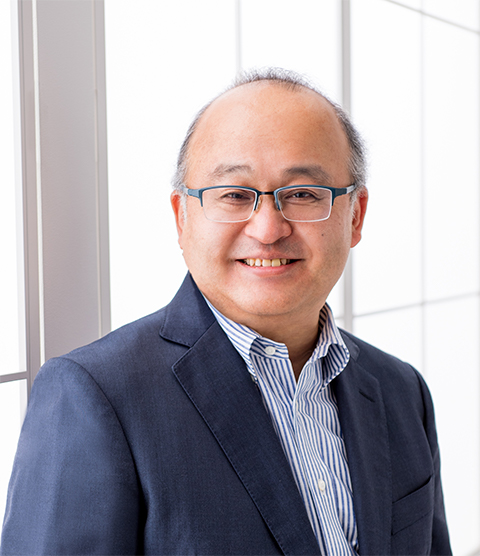
Suzuki, Shigeya

写真a

Affiliation

Research Centers and Institutes, Keio University Global Research Institute ( Mita )

Position

Project Professor (Non-tenured)

Related Websites

External Links

Career 【 Display / hide

  • 1985.04
    -
    Present

    Foretune Co., Ltd., President and CEO

  • 1999.10
    -
    2004.06

    Omnisci Software Inc., President and CEO

  • 2003.10
    -
    Present

    Keio Research Institute at SFC, Auto-ID Lab Japan, Associate Director of Research and Development

  • 2005.02
    -
    2007.03

    University of Southern California, Information Sciences Institute, Visting Scholar

  • 2006.04
    -
    2010.03

    Keio University, Graduate School of Media and Governance, Research Associate

display all >>

Academic Background 【 Display / hide

  • 2011.03

    Keio University, Graduate School of Media and Governance, Cyber Informatics

    Graduate School, Withdrawal after completion of doctoral course requirements, Doctoral course

Academic Degrees 【 Display / hide

  • Ph.D, Keio University, Coursework, 2012.02


Research Areas 【 Display / hide

  • Manufacturing Technology (Mechanical Engineering, Electrical and Electronic Engineering, Chemical Engineering) / Communication and network engineering

  • Informatics / Theory of informatics (Fundamental Informatics)

  • Informatics / Computer system (Computer System Network)

  • Informatics / Software (ソフトウエア)

  • Informatics / Database (Media Informatics/Data Base)

display all >>

Research Keywords 【 Display / hide

  • Information System for RFID

  • Internet

  • Data Security

  • Data Security

  • Blockchain

display all >>

Research Themes 【 Display / hide

  • Blockchain Technology, 

    2015
    -
    Present

     View Summary

    Technology related to Blockchain, applications based on the technology, operation and analysis of the technology

  • Research on modeling and simulation of Quantum Network System, 

    2013
    -
    Present

     View Summary

    Research on modeling of quantum network system, in the point of view of computer network researcher. Also, develop a quantum network simulation system.

  • Research on DNSSEC Extension, 

    2005
    -
    Present

  • Design of Information System Architecture for RFID, 

    2005
    -
    Present


Books 【 Display / hide

  • Essential C++

    Stanly Lippman, SUZUKI SHIGEYA, 2000.11

  • インターネットオペレーション - 原理と実際

    SUZUKI SHIGEYA, 共立出版, 1999.05

Papers 【 Display / hide

  • Extended ACME Protocol with Time-Limited VC Tokens for Automated Organization Validation

    Ooka T., Sasada T., Abe R., Taenaka Y., Kadobayashi Y., Suzuki S.

    International Conference on Information Networking    225 - 230 2025

    ISSN  19767684

     View Summary

    The Public Key Infrastructure (PKI) plays an essential role in securing Internet communications by enabling Certificate Authorities (CAs) to issue TLS certificates to web servers. These certificates enable browsers to authenticate web servers, though their expiration can disrupt website availability. To mitigate the problem, the Automated Certificate Management Environment (ACME) protocol automates certificate issuance and domain certification. However, Organization Validation (OV) certificate management is not automated because organization validation involves validating an organization's legal status and intent that are manually conducted, and are challenging to automate. This paper proposes an extended ACME protocol using Verifiable Credentials (VCs) to automate organization validation. VCs are digitally signed credentials issued by trusted authorities containing verifiable information, such as identity or educational qualifications. Reusing a previously issued VC for organization validation can pose significant risks by potentially enabling malicious actors to bypass the validation process. The proposed protocol solves this challenge by forcing a client requesting an OV certificate to obtain a short-lived VC after initiating the organization validation process, thereby limiting the reuse of VC and preventing unauthorized use. Our experimental results demonstrate that this protocol enhances security by preventing misuse of invalid VC while minimizing delays in certificate issuance.

  • A Conceptual Model for Claim Validation Based on Cryptographically Signed Data

    Abe R., Suzuki S., Nakamura O.

    IEEE Access 13   2723 - 2735 2025

     View Summary

    In this paper, we propose a conceptual model for claim validation based on signed data while clarifying the gap between validation and verification. As various activities are conducted via the Internet and the Web, verifying information and its originators is essential for countermeasures against threats, such as spoofing or falsifying an achievement. These discussions utilize cryptographically signed data, which includes a digital signature that allows a recipient can confirm the authenticity of the source using cryptographic techniques. In applications that utilize signed data to represent a claim, the recipient judges whether the claim is valid to avoid misidentification of the claim. However, the standards for digital certificates, such as Verifiable Credentials, do not cover the validation of the claim represented by the certificate, including the truth or falsity of the claim. Considering that verifying a signature does not directly indicate the validity of the claim, the gap between verification and validation should be clarified to cover the validation of the claim. We then hypothesize that the gap is the presence or absence of the validator's criteria, and review the definitions in two standard documents to confirm our hypothesis. We then propose a conceptual model for claim validation that utilizes signed data. In our model, a validator, who is a recipient of the claim, defines a validation policy to represent the validator's criteria. We also discuss a communication model between the claimant, who is a originator of the claim, and the validator. For claims that the validator cannot directly validate, we introduce an additional model that involves a certifier that the validator trusts. We analyze the applicability of our model through three use cases, and conclude that our models are applicable. Based on our model, we anticipate exploring several scenarios to validate diverse claims using signed data.

  • Mitigation of Seller and Buyer's Dilemma with Transaction History and Escrow

    Abe R., Kurita S., Kobayashi M., Suzuki S.

    ACM International Conference Proceeding Series    1 - 9 2023.12

     View Summary

    In this paper, to estimate the risk of economic loss incurred by both parties in production order transactions, we propose a scheme that enables escrow and confirmation of the results without relying on a third party. In such transactions, both parties risk incurring economic losses if the other party behaves dishonestly. Generally, the risk can be reduced with an escrow service provided by a trusted third party. However, there is a risk of fraud by the third party; in some cases, the third party may not be available for the buyer or seller. Several existing schemes utilize fair exchange and blockchain to disburse the deposited payment upon the delivery of specific data. However, in production order transactions, some cases cannot be handled only by completion of delivery, such as disputes that arise when the data does not meet the quality expected by the buyer. In such cases, before the transaction starts, a party would confirm the counterparty's behavior in past transactions to estimate the risk of a dispute occurring. In this paper, we propose a scheme that records the history of past transaction processes while utilizing blockchain-based escrow and allows future counterparties to confirm the history as a reference for estimating risk. By the opportunity loss that a history of dishonest behavior causes and applying blockchain-based escrow, the scheme motivates sellers and buyers to behave in good faith. We implemented a prototype system on top of Ethereum and verified its feasibility. By expanding the scope of transactions, we expect that it will be possible to determine whether transactions between individuals over the Internet are feasible without relying on a specific escrow service.

  • A System for Selective Disclosure of Information about a Patient with Intractable Disease

    Sugita E., Abe R., Suzuki S., Uehara K., Nakamura O.

    Proceedings International Computer Software and Applications Conference 2023-June   1482 - 1487 2023

    ISSN  07303157

     View Summary

    To receive effective treatment during emergency response due to seizures or unforeseen accidents, a patient with intractable diseases must disclose information about their disease to an emergency physician. If the patient loses consciousness while traveling, the patient should disclose this information to a companion in advance. However, disclosing this information to a companion is undesirable because the information is confidential. Thus, we propose a system that discloses specific information on intractable diseases only when an emergency physician has verified they possess a medical license. Otherwise, the proposed system only discloses appropriate first aid information. We implemented a prototype of the proposed under the assumption that a physician has a digital medical license based on verifiable credentials (i.e., a standard for digital credentials). With this system, the patient does not disclose confidential information to the patient's companion but does disclose necessary information to the emergency physician.

  • A Quantum Internet Architecture

    Meter R.V., Satoh R., Benchasattabuse N., Teramoto K., Matsuo T., Hajdusek M., Satoh T., Nagayama S., Suzuki S.

    Proceedings 2022 IEEE International Conference on Quantum Computing and Engineering Qce 2022    341 - 352 2022

     View Summary

    Entangled quantum communication is advancing rapidly, with laboratory and metropolitan testbeds under development, but to date there is no unifying Quantum Internet architecture. We propose a Quantum Internet architecture centered around the Quantum Recursive Network Architecture (QRNA), using RuleSet-based connections established using a two-pass connection setup. Scalability and internetworking (for both technological and administrative boundaries) are achieved using recursion in naming and connection control. In the near term, this architecture will support end-to-end, two-party entanglement on minimal hardware, and it will extend smoothly to multiparty entanglement and the use of quantum error correction on advanced hardware in the future. For a network internal gateway protocol, we recommend (but do not require) qDijkstra with seconds per Bell pair as link cost for routing; the external gateway protocol is designed to build recursively. The strength of our architecture is shown by assessing extensibility and demonstrating how robust protocol operation can be confirmed using the RuleSet paradigm.

display all >>

Papers, etc., Registered in KOARA 【 Display / hide

Presentations 【 Display / hide

  • Academia's Interest Beyond Cryptocurrency on Blockchain

    SUZUKI SHIGEYA

    [International presentation]  Asian Internet Engineering Conference (Bangkok, Thailand) , 

    2017.11

    Oral presentation (invited, special), Asian Institute of Technology, intERlab, Thailand

     View Summary

    Since the birth of the cryptocurrency "Bitcoin", we observe an enormous number of the introduction of similar cryptocurrencies, born of new start-up companies with an interesting idea. From a business perspective, the trend is exciting and may be favorable. But if we compare with the history of the commercial Internet which took decades to become commodity technology, the cryptocurrency technology looks like too early to be used, possibly immature without careful study. The speaker briefly talks about Blockchain technology in the perspective of the possibility of academic research.

  • いまさら人に聞けないブロックチェーン技術

    SUZUKI SHIGEYA

    ISOC-JP Workshop (ビットコインという暗号通貨を実現する為の概念として話題となったブロックチェーンは、現在、一般的に「ネットワーク型システムにおける非中央集権的な"台帳"」と説明されています。ブロックチェーンは様々な技術的知見を組み合わせて情報を分散的に保存した上で、その内容の正確さの維持を実現することを基礎に、技術と利用領域の双方で拡張と拡大を続けています。本ワークショップではブロックチェーン技術の概要をインターネット技術の視点を用いてお話しいただきます。) , 

    2017.10

    Public lecture, seminar, tutorial, course, or other speech, ISOC-JP(Internet Society Japan Chapter)

  • 意図しないBLE接続を防ぐデジタルサイネージ・スマートフォン連携システムの構築

    SUZUKI SHIGEYA

    情報処理学会シンポジウムシリーズ(CD-ROM), 

    2016.06

    Oral presentation (general)

  • ソーシャルネットワークを用いたWi‐Fiユーザー認証の提案・構築

    SUZUKI SHIGEYA

    情報処理学会シンポジウム, 

    2016.06

  • 電子ペーパーを利用した移動ダイナミックサイネージ

    富田 千智, 横石 雄大, 鈴木 茂哉, 羽田 久一, 三次 仁

    [Domestic presentation]  電子情報通信学会2010総合大会 (東北大学) , 

    2010.03

    Oral presentation (general), 電子情報通信学会

display all >>

Research Projects of Competitive Funds, etc. 【 Display / hide

  • 先進的通信アプリケーション開発推進型研究開発タイプ II フェーズ II 「ネットワー ク仕様定義による広域分散ネットワークの自動運用管理システムの開発」

    2014.09
    -
    2015.03

    Ministry of Internal Affairs and Communications, Strategic Information and Communications R&D Promotion Programme (SCOPE), Commissioned research, Coinvestigator(s)

  • 正確な測位情報と時刻情報に 基づいた次世代メディアの開発

    2013.09
    -
    2014.03

    Ministry of Internal Affairs and Communications, 先進的通信アプリケーション 開発推進事業, Jun Murai, Commissioned research, No Setting

  • ダイナミックネットワーク技術の研究開発

    2008.03
    -
    2010.03

    慶應義塾大学, Commissioned research, No Setting

  • コ・モビリティ社 会の創成

    2007.08
    -
    2010.03

    慶應義塾大学, Special Coordination Funds for the promotion of Science and Technology, Research grant, No Setting


Courses Taught 【 Display / hide

  • INTRODUCTION TO TRUSTED INTERNET

    2026

  • INTRODUCTION TO TRUSTED INTERNET

    2025

  • INTRODUCTION TO TRUSTED INTERNET

    2024

  • INTRODUCTION TO TRUSTED INTERNET

    2023

Courses Previously Taught 【 Display / hide

  • 情報基礎・情報基礎 2

    Keio University

    2014.04
    -
    2015.03

    Autumn Semester, Seminar, Within own faculty, 2h, 38people

  • 情報基礎・情報基礎1

    Keio University

    2014.04
    -
    2015.03

    Spring Semester, Seminar, Within own faculty, 2h, 38people


Social Activities 【 Display / hide

  • WIDE Project

    2012.03
    -
    Present
  • 汎用技術等実態調査(我が国防衛産業における業務プロセスやビジネスモデル変革のための航空機産業における電子タグ等の 利用動向等調査)」における調査委員会

    2008.02
    -
    2008.03

Memberships in Academic Societies 【 Display / hide

  • Auto-ID Lab Japan (Keio Research Institute at SFC), 

    2003.10
    -
    Present

Committee Experiences 【 Display / hide

  • 2012.03
    -
    Present

    Board Member, WIDE Project

  • 2003.10
    -
    Present

    Associate Director of Research and Development, Auto-ID Lab Japan (Keio Research Institute at SFC)

  • 2016.05
    -
    Present

    英文誌EB 編集委員, 電子情報通信学会

  • 2008.02
    -
    2008.03

    委員および調査団副団長, 汎用技術等実態調査(我が国防衛産業における業務プロセスやビジネスモデル変革のための航空機産業における電子タグ等の 利用動向等調査)」における調査委員会