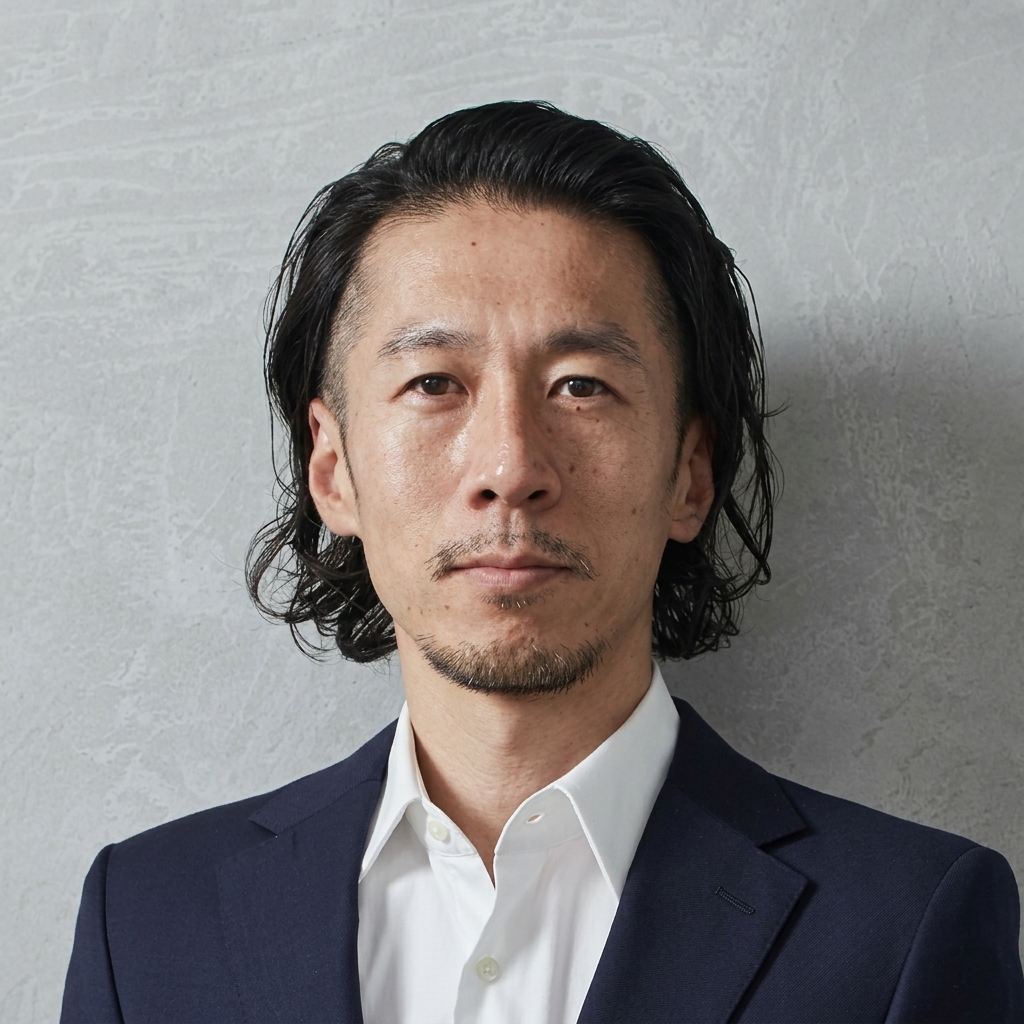
Tokuhisa, Satoru

写真a

Affiliation

Faculty of Environment and Information Studies ( Shonan Fujisawa )

Position

Professor


Books 【 Display / hide

  • Design for Service with Robots in Elderly Care Facilities in Japan Focusing on Human-to-Human Interaction

    Tokuhisa S., Morimoto T., Design Research Foundations, 2025

     View Summary

    In 2010, seven per cent of the population in Asia was elderly, and this proportion is expected to reach 14 per cent by 2035. Japan was one of the first countries in the world to experience a declining birth rate and ageing population; with its extensive experience in this field, Japan needs to strengthen its cooperation with other countries in the region to deal with the problems of an ageing society and social security systems. In particular, the demand for medical care, elder care and health-related industries is expected to be high in Asian countries with ageing societies. This chapter focuses on elder care services in Japan and discusses service design and business transformation. The use of service robots to address the shortage of workers to assist the increasing number of elderly people is attracting attention. However, there is resistance to technology and robots among the elderly. Through fieldwork at an elder care facility and the implementation of prototypes for service with robots focusing on human-to-human interaction (HHI), we discuss what needs to be considered when designing service robots in the context of elderly care in Japan and and what’s the role of service design for that.

Papers 【 Display / hide

  • How HCI adopts service dominant logic

    Tokuhisa S., Morimoto T.

    International Journal of Human Computer Studies 216 2026.11

    ISSN  10715819

     View Summary

    This research explores how Service Dominant Logic (SDL) can be effectively integrated into Human-Computer Interaction (HCI) design processes. While service design has gained interest in HCI, it remains primarily limited to interaction-level dimensions rather than system-level concepts. Through two case studies in elderly care and healthcare facilities in Japan, we demonstrate practical methods for incorporating SDL's key concepts—actor networks, service exchange, resource integration, and institutions—into the Human-Centered Design process. Our findings show that mapping actor networks helps identify appropriate service providers, analyzing service exchanges informs value proposition decisions, understanding resource integration assesses actors' interaction capabilities, and identifying institutions ensures contextually appropriate services. The integration of SDL concepts enables more holistic service design that extends beyond interaction-level concerns to address collaborative networks and ecosystem dimensions. This approach contributes to developing more effective and sustainable service systems that better serve both providers and beneficiaries.

  • Dual-Track UX: A User Experience Evaluation Method for B2B SaaS Development

    Qiu J., Tokuhisa S.

    Conference on Human Factors in Computing Systems Proceedings  2025.04

     View Summary

    User experience (UX) evaluation is critical for identifying user requirements and mitigating the risk of product failure during the development of interactive systems. This paper presents Dual-Track UX, a specialized UX evaluation method designed to address three key challenges in evaluating the UX of Business-to-Business (B2B) Software-as-a-Service (SaaS) products: (a) diversified user goals and operational patterns, (b) limited access to external users, and (c) the necessity for long-term evaluation. Dual-Track UX integrates heuristic evaluation, Goals-Signals-Metrics process, exploratory testing, and service design tools into a cohesive dual-track workflow. Track 1 identifies and prioritizes usability issues in the user interface, while Track 2 constructs UX metrics and monitors the effectiveness of user goal achievement over time. Preliminary validation through expert interviews highlighted the advantages, limitations, challenges in adoption, and opportunities for further refinement, paving the way for its broader application in B2B SaaS development.

  • The Adventure in Science Museum: AR Game Featuring Anthropomorphized Companion to Enhance Learning Experience in Science Museum

    Baswedan A.D., Tokuhisa S.

    Chi Play Companion 2024 Companion Proceedings of the Annual Symposium on Computer Human Interaction in Play    18 - 23 2024.10

     View Summary

    Anthropomorphism is the attribution of human-like characteristics to non-human or inanimate agents. There is little discussion of incorporating anthropomorphic forms in science museums as a popular learning destination. Based on this opportunity and previous research, we designed an AR game featuring anthropomorphized companions in a science museum. This work-in-progress paper explains the design concept of ‘The Adventure in Science Museum’ development, provides a run-down of the early prototype, and discusses the preliminary results of user testing in one of the science museums in Japan. Preliminary results from user testing (n=13) showed that anthropomorphized virtual companions in the science museum were perceived as cute and exciting, and they were able to present science explanations in simple and immersive ways through their conversations with players and other companions.

  • Light-Field Visual System for the Remote Robot Operation Interface

    Morimoto T., Hirota M., Sasaki K., Kato K., Takigawa R., Yoneyama S., Hayashi T., Fujikado T., Tokuhisa S.

    IEEE International Conference on Intelligent Robots and Systems    7020 - 7025 2023

    ISSN  21530858

     View Summary

    Robotic automation is expected to be applicable in various fields. The utilization of robots requires human-robot interaction (HRI) for prolonged direct manipulation or learning. Recently, numerous studies on HRI have been conducted in virtual space using virtual, augmented, and mixed reality (VAM-HRI). In the future, VAM-HRI applications are expected to involve users wearing head-mounted displays (HMDs). However, HMDs present various problems, such as vergence and accommodation conflict (VAC) caused by eye strain, and thus cannot be used for long periods. In this study, a remote robot operation interface is developed to solve this problem. Experiments are conducted from the viewpoint of ophthalmology to determine whether 'removal of VAC' and 'improvement of depth perception' by Light Field HMDs (LFHMD), and 'reduction of eye strain' by TransRay are feasible. The results reveal that the LFHMD is superior to the general HMDs for all items.

  • Service design method for both non-human and human actors: What kinds of jobs should be assigned to service robots?

    Tokuhisa S., Morimoto T.

    Journal of Design Business and Society 7 ( 2 ) 141 - 163 2021.10

    ISSN  20552106

     View Summary

    A variety of healthcare robots for elderly care have been developed. However, as the elderly and caregivers experience psychological resistance towards not only new technologies but specifically to robots, the adoption of healthcare robots has scarcely progressed. This article aims to develop a service design method, which consists of a design process including design tools to identify jobs in an elderly care facility and to reveal what kinds of jobs to assign to service robots and to caregivers. This article develops a design method which is composed of six steps and adopts original design tools to identify jobs needed in elderly care facilities and assign them to human and non-human actors, including service robots. The tools include an actor map to visualize the Actor to Actor (A2A) network, a current jobs to be done (JTBD) worksheet to visualize existing jobs, a new JTBD worksheet to visualize new jobs, and an actor worksheet to summa-rize information about each actor including their philosophy. With this design method, we conducted a series of workshops with the aim to develop a service fulfilled by humans and non-humans at an elderly care facility in Shizuoka prefecture in Japan. The results of questionnaires administered to the workshop participants demonstrated the effectiveness of all the tools except the new JTBD worksheet. Also, the results of interviews with employees in the elderly care facility indicated the effectiveness of the approach, which reveals visible and invisible regulative, normative and cultural-cognitive elements through interviews with human actors, and embeds them in the service design process. The design method including the original design tools proposed in this article contribute to a service design method for the use of robots in elderly care facilities by allocating jobs to human actors and non-human actors appropriately, and it also contributes to the issue of psychological resistance to the adoption of service robots in these facilities, which brings efficiencies to society. The contribution of this article is to reframe the issue of resistance to the adoption of service robots in elderly care facilities to the issue of what kinds of jobs in an elderly care facility should be assigned to service robots or caregivers, and the development of a service design process including original design tools.