
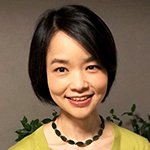
堀田 聰子 ( ホッタ サトコ )

Hotta, Satoko

写真a

所属(所属キャンパス)

健康マネジメント研究科 ( 信濃町 )

職名

教授

HP

その他の所属・職名 【 表示 / 非表示

  • 医学部, 兼担

経歴 【 表示 / 非表示

  • 1999年04月
    -
    2004年06月

    三和総合研究所, 研究員

  • 2004年08月
    -
    2008年04月

    東京大学社会科学研究所人材ビジネス研究寄付研究部門, 助手(のち助教)

  • 2008年05月
    -
    2010年03月

    東京大学社会科学研究所人材ビジネス研究寄付研究部門, 特任准教授

  • 2010年04月
    -
    2011年03月

    ユトレヒト大学, 訪問教授

  • 2010年04月
    -
    2011年03月

    社会文化計画局(オランダ), 研究員

全件表示 >>

学歴 【 表示 / 非表示

  • 1995年04月
    -
    1999年03月

    京都大学, 法学部(2回生進級時に経済学部より転部)

    大学, 卒業, その他

  • 2006年04月
    -
    2008年03月

    大阪大学, 大学院国際公共政策研究科

    大学院, 修了, 博士後期

学位 【 表示 / 非表示

  • 法学士, 京都大学, 課程, 1999年03月

  • 博士(国際公共政策), 大阪大学, 課程, 2008年03月

免許・資格 【 表示 / 非表示

  • 専門社会調査士, 2007年


研究分野 【 表示 / 非表示

  • 人文・社会 / 地域研究

研究キーワード 【 表示 / 非表示

  • ケア人材政策

  • 人的資源管理

  • 地域共生

  • 地域包括ケア

  • 認知症


著書 【 表示 / 非表示

  • 包括的支援-地域共生社会をつくる

    菊池馨実・鏑木奈津子編, 有斐閣, 2025年08月,  ページ数: 267

    担当範囲: 堀田聰子「医療-「社会的処方」を手がかりとする医療を含むケアリングコミュニティの構築」,  担当ページ: 91-107

  • 介護福祉士の専門性とは何か

    日本介護福祉士会編集, 中央法規, 2023年11月

    担当範囲: 認知症の本人とともに、暮らしやすい地域をつくる,  担当ページ: 147-160

  • 認知症世界の歩き方 実践編

    筧裕介・issue+design著,一般社団法人ボーダレス,認知症未来共創ハブ,樋口直美監修, issue+design books, 2023年03月,  ページ数: 231

  • コンパッション都市―公衆衛生と終末期ケアの融合

    アラン・ケレハー著,竹之内裕文・堀田聰子監訳, 慶應義塾大学出版会, 2022年10月,  ページ数: 353

    原著者: Allan Kellehear

  • プライマリ・ケアの理論と実践

    プライマリ・ケア連合学会監修, 日本医事新報社, 2021年10月,  ページ数: 205

    担当範囲: 長嶺由衣子,堀田聰子「社会的処方」の地域共生社会推進に向けた有用性,  担当ページ: 168-169

全件表示 >>

論文 【 表示 / 非表示

  • Smartphone Use and Social Activities Among People With Mild to Moderate Dementia: Multi-Informant Cross-Sectional Study

    Tsuda S., Hotta S., Matsumoto H., Ito K.

    Jmir Aging 9 2026年

     概要を見る

    Background: Smartphones have become deeply embedded in daily life, supporting a range of social and practical activities. Individuals with dementia can potentially use smartphones to compensate for cognitive decline and maintain independence. However, while smartphones are widely studied in controlled research settings, little is known about how individuals with dementia spontaneously use them in everyday life. Understanding usage patterns and their potential link to social participation could inform strategies to support smartphone use in their social and practical daily activities. Objective: This study aimed to identify factors associated with spontaneous smartphone use, describe usage patterns, and examine whether smartphone use is associated with participation in social activities. Methods: In 2024, we conducted a cross-sectional survey among community-dwelling individuals with mild to moderate dementia from 17 medical facilities in Tokyo. Structured questionnaires were completed by the participants, their families, and attending physicians. Participation in social activities was assessed using the “Spending Time with Others” subscale of the Social Functioning in Dementia (SF-DEM) scale. Factors associated with smartphone use were analyzed using multinomial logistic regression. Associations with participation in social activities were assessed via hierarchical linear regression. Results: Among 151 participants with a mean age of 82.9 (SD 6.6) years, 43 (29%) participants were regular smartphone users. Smartphone use was negatively associated with older age (odds ratio [OR] 0.41, 95% CI 0.21‐0.80) and positively associated with longer education (OR 1.82, 95% CI 1.00‐3.30), living alone (OR 3.17, 95% CI 1.08‐9.31), and better cognitive function (OR 2.14, 95% CI 1.24‐3.69). Common uses included calling, texting, taking photos and videos, and checking the news and weather. Smartphone users reported marginally more frequent participation in social activities than nonusers did (b=1.41, 95% CI –0.01 to 2.83), particularly visiting the homes of friends or family (b=0.43, 95% CI 0.08‐0.78) and shopping together (b=0.49, 95% CI 0.15‐0.83). Conclusions: Despite their limited use at the time of this writing, commercial-based smartphones have the potential to support participation in social activities among individuals with dementia. Targeted support may help bridge the gap between this usage and the broader capabilities of these devices, enhancing their role in sustaining meaningful social participation.

  • Toward an LLM Chatbot for Parenting Support: Adapting to Diverse Consultation Needs

    Ito R., Takiguchi T., Hirata M., Mori Y., Hotta S., Ariki Y.

    Transactions of the Japanese Society for Artificial Intelligence 41 ( 2 ) 1 - 2 2026年

    ISSN  13460714

     概要を見る

    In recent years, the increasing prevalence of nuclear families and the weakening of local communities have made solo parenting a significant social issue. In this context, there has been growing interest in chatbot systems that can offer parenting support anytime and anywhere. In particular, chatbots powered by Large Language Models (LLMs) are expected to address a wide variety of parenting concerns. However, the nature of these concerns is diverse. Some users simply seek someone to listen, while others wish to organize their thoughts or obtain specific information. Because each user’s purpose differs, chatbots are required to respond in a flexible and personalized manner. Traditional systems have struggled to provide such adaptability. To address this challenge, we developed a chatbot based on ChatGPT-4o, designed to adapt its responses flexibly according to the user’s underlying intent. We conducted user studies in which real participants engaged with the chatbot, and we analyzed both the chat logs and questionnaire responses to evaluate its effectiveness. Additionally, we carried out comparative experiments using Qwen-2.5-7B-Instruct, a lightweight open-source model, to explore future considerations such as privacy protection and local deployment. The results demonstrated that our chatbot based on ChatGPT-4o is capable of accurately inferring users’ goals and adjusting its conversational strategies accordingly. This capability contributed to greater user satisfaction and trust. On the other hand, Qwen-2.5-7B-Instruct exhibited limitations in language capability and prompt interpretation. The main contributions of this study are threefold: (1) proposing a novel approach to designing chatbots that can adapt their conversational style based on user intent; (2) the validation of the proposed approach through user studies to evaluate its effectiveness and identify potential issues; and (3) a comparative analysis of ChatGPT-4o and Qwen-2.5-7B-Instruct to highlight the challenges associated with using lightweight open-source models.

  • Richness of emotion in people with dementia

    Onzo A., Nozawa S., Ishikawa T., Mogi K., Oono M., Tsuda S., Hotta S.

    Biosystems 257 2025年11月

    ISSN  03032647

     概要を見る

    It is important to explore not only what is lost with the progression of dementia, but also what is left and what can be compensated or developed by adapting to the special needs of the conditions. Some studies suggest that as dementia progresses, people become less emotionally expressive and have difficulties in distinguishing between other people's facial expressions. On the other hand, it is also said as cognitive function declines, anger and anxiety increase, placing a burden on caregivers. Here we report the richness of emotions in people with dementia expressed in their interviews. We analysed the transcripts of 88 interviews of people with dementia (4.8 years after diagnosis), which lasted about 60–90 min, sometimes even longer. Those transcripts are valuable, as they show that people with dementia can express themselves verbally for a long time. From the analysis of the transcripts using Paul Ekman's basic emotions, we found that the strongest emotion expressed in the interviews was happiness. We also conducted a survey of the general public recruited through X about the emotions of people with dementia, and found that people without dementia imagined that the strongest emotion felt by people with dementia was fear. Our results suggest that the cognitive abilities and emotional states of people with dementia can be more robust than people without dementia typically perceive. It might be possible to augment happiness-related emotions by the support of those around people with dementia, and the cognitive efforts of the affected people themselves.

  • 認知症の人の社会参加の機会の確保

    堀田聰子

    老年精神医学雑誌 36 ( 8 ) 702 - 712 2025年08月

    研究論文(学術雑誌), 単著, 筆頭著者

  • Improving care for people with dementia through co-creation of action plans in the Western Pacific region

    Ong E.T.T., Hotta S., Suharya D., Lynch C., Seeher K.

    BMJ Clinical Research Ed 390 2025年07月

    ISSN  09598146

全件表示 >>

総説・解説等 【 表示 / 非表示

  • 共生社会の実現を推進するための認知症基本法と地域包括ケアの課題

    堀田聰子

    日本医師会雑誌 154 ( 4 ) 412 - 415 2025年07月

    記事・総説・解説・論説等(その他), 単著, 筆頭著者

  • 共生社会の実現を推進するための認知症基本法の特徴・意義と自治体への期待

    堀田聰子

    地方自治 (ぎょうせい)   ( 927 ) 2 - 18 2025年02月

    単著, 筆頭著者

  • 認知症のある方100人以上にインタビューして浮かび上がってきたこれからの支援のカタチ

    堀田聰子

    ケアマネジャー (中央法規出版)  27 ( 1 ) 24 - 29 2025年01月

    単著, 筆頭著者

  • 共生社会の実現を推進するための認知症基本法の意義と自治体への期待

    堀田聰子

    市政 (全国市長会)     34 - 36 2024年12月

    単著, 筆頭著者

  • 介護労働市場の状況と介護・福祉人材をめぐる政策動向

    堀田聰子

    医学のあゆみ (医歯薬出版)  288 ( 4 ) 305 - 310 2024年01月

    単著

全件表示 >>

研究発表 【 表示 / 非表示

  • 認知症とともによりよく生きる今と未来に向けて:認知症未来共創ハブのチャレンジ

    堀田聰子

    [国内会議]  日本認知症ケア学会関西ブロック大会2021, 

    2022年01月
    -
    2022年02月

    口頭発表(招待・特別)

  • 変化を求められる対人支援専門職教育: 諸外国の動向から

    堀田聰子

    [国内会議]  第80回日本公衆衛生学会総会, 

    2021年12月

    シンポジウム・ワークショップ パネル(公募)

  • 日本における介護人材確保をめぐる取組み

    堀田聰子

    [国際会議]  第9回日中韓少子高齢化セミナー, 

    2021年12月

  • 当事者の思い・体験・知恵を中心に今と未来を拓く:認知症未来共創ハブを手がかりに

    堀田聰子

    [国内会議]  第40回日本認知症学会学術集会オンラインシンポジウム7, 

    2021年11月
    -
    2021年12月

    シンポジウム・ワークショップ パネル(指名)

  • 地域共生とは何か-政策的潮流と支援のかたち

    堀田聰子

    [国際会議]  第12回東アジア市民社会フォーラム, 

    2021年11月

全件表示 >>

競争的研究費の研究課題 【 表示 / 非表示

  • 看護のリスキリングを促進する多職種連携基盤型事例検討法の開発

    2023年04月
    -
    2027年03月

    科研費(基盤C), 大沼由香, 研究分担者

  • 死生を支え合うコミュニティの思想的拠り所の究明-対話とコンパッションを糸口に

    2022年04月
    -
    2026年03月

    科研費(基盤C), 竹之内裕文, 研究分担者

  • 独居認知症高齢者等の地域での暮らしを安定化・永続化するための研究

    2022年04月
    -
    2025年03月

    厚生労働省, 厚生労働科学研究費補助金(認知症政策研究事業), 粟田主一, 研究分担者

  • 地域とつくる「どこでもドア」型ハイブリット・ケアネットワーク

    2021年11月
    -
    2026年03月

    RISTEX, SDGsの達成に向けた共創的研究開発プログラム, 近藤尚己, 研究分担者

  • 誰もが参加し繋がることでウェルビーイングを実現する都市型ヘルスコモンズ共創拠点

    2021年
    -
    2030年

    JST, 共創の場形成支援プログラム(COI-NEXT)共創分野(本格型), 中村雅也, 研究分担者

全件表示 >>

受賞 【 表示 / 非表示

  • Ageing Asia Global Ageing Trailblazer 2025

    2025年04月

  • 日経ウーマン・オブ・ザ・イヤー2015リーダー部門入賞

    2014年12月

  • 第12回労働関係論文優秀賞

    2011年


担当授業科目 【 表示 / 非表示

  • 衛生学Ⅰ

    2026年度

  • 健康マネジメント概論

    2026年度

  • 老年発達援助論

    2026年度

  • パーソナルケアシステム論

    2026年度

  • 健康マネジメント特論Ⅰ

    2026年度

全件表示 >>


委員歴 【 表示 / 非表示

  • 2026年03月
    -
    2027年06月

    品川区認知症施策推進委員, 品川区

  • 2025年08月
    -
    2027年08月

    社会保障審議会(介護給付費分科会、介護事業経営調査委員会、介護報酬改定検証・研究委員会)委員, 厚生労働省

  • 2025年06月
    -
    2026年03月

    都市づくりのグランドデザインの改定に向けた検討会委員, 東京都都市整備局

  • 2025年04月
    -
    継続中

    社会保障審議会福祉部会福祉人材確保専門委員会委員, 厚生労働省

  • 2025年04月
    -
    継続中

    社会保障審議会福祉部会委員, 厚生労働省

全件表示 >>