
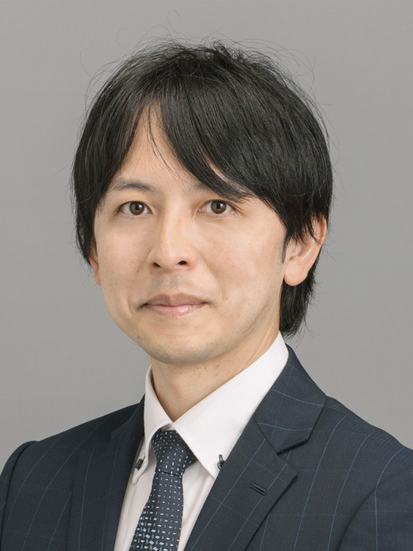
Arai, Noriyoshi

写真a

Affiliation

Faculty of Science and Technology, Department of Mechanical Engineering Science for Open and Environmental Systems ( Yagami )

Position

Professor

E-mail Address

E-mail address

Related Websites

Contact Address

3-14-1 35-107 Hiyoshi, Kohoku-ku, Yokohama

Telephone No.

+81-45-566-1846

Fax No.

+81-45-566-1495

External Links

Other Affiliation 【 Display / hide

  • RIKEN, Computational Astrophysics Laboratory, Visiting researcher

Career 【 Display / hide

  • 2009.04
    -
    2010.03

    THe University of Electro-Communications, Department of Mechanical Engineering and Intelligent Systems, Assistant Professor

  • 2009.04
    -
    2019.03

    Keio University, Leading-edge Laboratory of Science and Technology, Researcher

  • 2009.04
    -
    2023.03

    RIKEN , Computational Astrophysics Laboratory, Visiting Researcher

  • 2010.04
    -
    2014.03

    The University of Electro-Communications, Department of Mechanical Engineering and Intelligent Systems, Assistant Professor

  • 2012.04
    -
    2013.03

    University of Nebraska-Lincoln, Department of Chemistry, Visiting Assistant Professor

display all >>

Academic Background 【 Display / hide

  • 2000.04
    -
    2004.03

    Keio University, Faculty of Science and Technology, Department of Mechanical Engineering

    University, Graduated

  • 2004.04
    -
    2006.03

    Keio University, School of Science for Open and Environmental Systems, Center for Science of Environment, Resource, and Energy

    Graduate School, Completed, Master's course

  • 2006.04
    -
    2009.03

    Keio University, School of Science for Open and Environmental Systems, Center for Science of Environment, Resource, and Energy

Academic Degrees 【 Display / hide

  • Doctor (Engineering), Keio University, Coursework, 2009.03

    Dissipative Particle Dynamics Simulation for Self-Assembly of Surfactant Solutions and Design of High-Energy Efficiency Nanomotor System

Licenses and Qualifications 【 Display / hide

  • 普通自動車第一種運転免許, 2000.09

  • 初級システムアドミニストレータ資格, 2000.11


Research Areas 【 Display / hide

  • Manufacturing Technology (Mechanical Engineering, Electrical and Electronic Engineering, Chemical Engineering) / Thermal engineering (Micro/Nano Engineering)

  • Nanotechnology/Materials / Nanomaterials (Micelle, Vesicle, Lamellar, bi-layer)

  • Nanotechnology/Materials / Nano/micro-systems (Active matter, Molecular motor, nano-pump)

  • Nanotechnology/Materials / Polymer materials (Polymer, Surfactant, Liquid crystal, Colloid, Emulsion)

Research Keywords 【 Display / hide

  • Soft Matter

  • confined system

  • molecular simulation

  • dissipative particle dynamics

  • machine learning

display all >>

Research Themes 【 Display / hide

  • Deepening Materials Development by Combining Molecular Simulation and Machine Learning, 

    2017
    -
    Present

     View Summary

    We reproduce the behavior of various polymer materials by molecular simulation, and combine the obtained results with machine learning to challenge the realization of highly efficient material design and unexplored physical properties.

  • Elucidation of Biological Functions and Design of Nanomachines by Molecular Simulation, 

    2007
    -
    Present

     View Summary

    The molecular simulation of biomembranes, molecular motors, and other in vivo functionalities is used to extract their essence and design new nano-machines.

  • Elucidating the Mechanism of Functional Materials by Molecular Simulation, 

    2005
    -
    Present

     View Summary

    We reproduce the behavior of various functional materials (polymer materials, surfactant materials, liquid crystal materials, etc.) by molecular simulation methods to elucidate the mechanisms by which their functionality is manifested.

Proposed Theme of Joint Research 【 Display / hide

  • Molecular simulation and machine learning for the design of functional materials

    Interested in joint research with industry (including private organizations, etc.),  Desired form: Technical Consultation, Funded Research, Cooperative Research

     View Summary

    The challenge is to visualize the inside of materials by molecular simulation and to reveal the molecular origins of physical properties and functionalities. In some cases, we will combine the obtained results with machine learning to examine how to improve the efficiency of materials development.

  • Molecular simulation and machine learning for the design of functional materials

    Interested in joint research with other research organizations (including universities, etc.),  Desired form: Cooperative Research

     View Summary

    The program aims to clarify the molecular origins of soft matter's excellent physical properties and functionalities and to create new materials by establishing complementary tasks between experiments and simulations.


Books 【 Display / hide

display all >>

Papers 【 Display / hide

  • Tail unsaturation controls monoglyceride monolayer organization and oil-water interfacial tension

    Sato, R; Tsukagoshi, S; Tanaka, L; Arai, N

    CHEMICAL PHYSICS 607 2026.08

    ISSN  0301-0104

  • Ni-OH promoted water dissociation on Pt/Ni dual active sites for accelerated alkaline hydrogen evolution

    Li, SB; Xia, TY; Zhao, YX; Wang, LR; Meng, F; Arai, N; Guo, HZ; Wang, RM

    MATERIALS CHEMISTRY FRONTIERS 10 ( 9 ) 1487 - 1496 2026.05

  • Enhanced Premelting at the Ice-Rubber Interface Using All-Atom Molecular Dynamics Simulation

    Kojima, T; Yasuda, I; Sato, T; Arai, N; Yasuoka, K

    LANGMUIR 42 ( 3 ) 2454 - 2461 2026.01

    ISSN  0743-7463

  • Tail unsaturation controls monoglyceride monolayer organization and oil–water interfacial tension

    R Sato, S Tsukagoshi, L Tanaka, N Arai

    Chemical Physics, 113167 607 2026

    ISSN  03010104

     View Summary

    Tail unsaturation is a standard design lever in emulsifier formulation, yet its coverage-dependent link to oil–water interfacial tension remains incomplete. Here we combine pendant-drop tensiometry with atomistic molecular dynamics (MD) using the mechanical (pressure-tensor) route to establish a quantitative structure–property for two monoglycerides that differ only in tail chemistry: monopalmitin (saturated) and monoolein (cis-unsaturated) at the triolein–saline interface. Experiments show that the unsaturated analogue lowers interfacial tension more effectively across comparable surface coverages. MD reproduces the coverage-resolved trends and attributes the difference to packing frustration from the cis double bond, which yields more disordered/fluid monolayers, greater interfacial thickness, enhanced headgroup hydration (higher hydrogen-bond occupancy and larger solvent-accessible surface area), and reduced short-range lateral order relative to the saturated analogue. These results establish a coverage-resolved structure–property linking tail chemistry to interfacial organization and to macroscopic interfacial tension, providing practical guidance for selecting and blending glyceride-based emulsifiers under formulation-relevant conditions.

  • Phase Transition and Ternary Alloying Synergistically Boosting Magnetic Field Response for Methanol Oxidation Reaction on L10-FeCrPt Nanochains

    Q Mo, R Liu, F Meng, Y Juan, J Li, S Wang, N Arai, J Liu, W Wang

    Applied Catalysis B: Environment and Energy, 126475 387 2026

    ISSN  0926-3373

     View Summary

    Designing magnetic materials with a strong response to external magnetic field is pivotal for enhancing electrocatalytic reactions in energy conversion and storage systems. Although significant progress has been made in spin catalysts for hydrogen and oxygen electrocatalytic reactions, the development of spin catalysts for small organic molecule reactions is still insufficient, which greatly hinders the exploration of the effect of magnetic fields on the electrochemical reaction. Herein, we propose a synergistic strategy combining ternary alloying and phase transition to construct L1<inf>0</inf>-FeCrPt intermetallic nanochains, which exhibit exceptional structural stability and a significantly boosted magnetic field response. After alloying Cr into FePt and transforming from the face-centered cubic (FCC) phase to the L1<inf>0</inf> phase through coating-assisted annealing, the activity of L1<inf>0</inf>-FeCrPt for the methanol oxidation reaction was enhanced by up to 41 % under a magnetic field of 8000 Oe, surpassing the enhancements of only 13 % and 30 % achieved by FCC FeCrPt and L1<inf>0</inf>-FePt, respectively. Based on the linear relation between the activation energy and the magnetic field, the magnetic moment parameter (M) is proposed to evaluate the magnetic response. The M value of L1<inf>0</inf>-FeCrPt reaches 46839 emu/g, which is 2.7 times that of L1<inf>0</inf>-FePt. DFT calculations indicate that the reaction barrier of L1<inf>0</inf>-FeCrPt is significantly reduced because the external magnetic field can facilitate the adsorption of CO, the breaking of O-H bonds, and the addition of OH* species. This study provides an efficient method for designing spin catalysts with high magnetic field response through ternary alloying and phase engineering.

display all >>

Papers, etc., Registered in KOARA 【 Display / hide

Reviews, Commentaries, etc. 【 Display / hide

  • Wetting hysteresis induces effective unidirectional water transport through a fluctuating nanochannel

    Noriyoshi Arai, Eiji Yamamoto, Takahiro Koishi, Yoshinori Hirano, Kenji Yasuoka, Toshikazu Ebisuzaki

    Nanoscale Horizons (Nanoscale Horizons)  8 ( 5 ) 652 - 661 2022.04

    ISSN  2055-6756

     View Summary

    We propose a water pump that actively transports water molecules through
    nanochannels. Spatially asymmetric thermal fluctuations imposed on the channel
    radius cause unidirectional water flow without osmotic pressure, which can be
    attributed to hysteresis in the cyclic transition between the wetting/drying
    states. We show that the water transport depends on fluctuations, such as
    white, Brownian, and pink noises. Because of the high-frequency components in
    white noise, fast switching of open and close states inhibits channel wetting.
    Conversely, pink and Brownian noises generate high-pass filtered net flow.
    Brownian fluctuation leads to a faster water transport rate, whereas pink noise
    has a higher capability to overcome osmotic pressure in the opposite direction.
    A trade-off relationship exists between the resonant frequency of the
    fluctuation and the flow amplification. The proposed pump can be considered as
    an analogy for the reversed Carnot cycle, which is the upper limit on the
    energy conversion efficiency.

  • Prediction of transport property via machine learning molecular movements

    Ikki Yasuda, Yusei Kobayashi, Katsuhiro Endo, Yoshihiro Hayakawa, Kazuhiko Fujiwara, Kuniaki Yajima, Noriyoshi Arai, Kenji Yasuoka

     2022.03

     View Summary

    Molecular dynamics (MD) simulations are increasingly being combined with
    machine learning (ML) to predict material properties. The molecular
    configurations obtained from MD are represented by multiple features, such as
    thermodynamic properties, and are used as the ML input. However, to accurately
    find the input--output patterns, ML requires a sufficiently sized dataset that
    depends on the complexity of the ML model. Generating such a large dataset from
    MD simulations is not ideal because of their high computation cost. In this
    study, we present a simple supervised ML method to predict the transport
    properties of materials. To simplify the model, an unsupervised ML method
    obtains an efficient representation of molecular movements. This method was
    applied to predict the viscosity of lubricant molecules in confinement with
    shear flow. Furthermore, simplicity facilitates the interpretation of the model
    to understand the molecular mechanics of viscosity. We revealed two types of
    molecular mechanisms that contribute to low viscosity.

  • 分子が関わる伝熱・熱工学 ナノ多孔質体に閉じ込められた物質の固液相転移現象と自己組織化現象

    金子敏宏, 荒井規允, 泰岡顕治

    伝熱 56 ( 236 )  2017

    ISSN  1344-8692

  • C221 The phase behavior and structure of binary liquid crystal using dissipative particle dynamics simulation !

    Nishiyama Yuichiro, Arai Noriyoshi

    Procee[d]ings of Thermal Engineering Conference (The Japan Society of Mechanical Engineers)  2015   "C221 - 1"-"C221-2" 2015.10

     View Summary

    In this study, we carried out a dissipative particle dynamics simulation about two kind of the length liquid crystal molecules. In this simulation, we observed phases as a volume fraction of liquid crystal molecules as a parameter with temperature change. As a result, we found that a transition temperature from isotropic phase to nematic phase depends on the volume fraction.

display all >>

Presentations 【 Display / hide

  • A Effect of graft design of amphiphilic polymers on the stability of concentrated Pickering emulsions

    Kojiro Suzuki, Yusei Kobayashi, Takashi Yamazaki, Toshikazu Tsuji, Noriyoshi Arai

    [International presentation]  38th Conference of the European Colloid & Interface Society (Copenhagen) , 

    2024.09

    Other

  • Biomimetic surfaces: Assessing free energy barrier using molecular simulation

    Fan Meng, Noriyoshi Arai

    [International presentation]  38th Conference of the European Colloid & Interface Society (Copenhagen) , 

    2024.09

    Other

  • Exploring nanostructured biomimetic surfaces: Measuring hydrophobic properties via free energy barrier using coarse-grained molecular simulation

    Fan Meng, Noriyoshi Arai

    [International presentation]  The 8th International Soft Matter Conference (North Carolina) , 

    2024.08

    Other

  • Prediction of self-assembly structures in multicomponent surfactant systems using graph convolution network

    Yuki Ishiwatari, Takahiro Yokoyama, Tomoya Kojima, Taisuke Banno, Noriyoshi Arai

    [International presentation]  27th International Congress of Chemical and Process Engineering (Prague) , 

    2024.08

    Other

  • Quantitative analysis of mesoscale self-assembly structures using machine learning and molecular simulation

    Naoya Osato, Takeo Sudo, Satoki Ishiai, Yuki Ishiwatari, Takahiro Yokoyama, Kenji Yasuoka, Noriyoshi Arai

    [International presentation]  27th International Congress of Chemical and Process Engineering (Prague) , 

    2024.08

    Other

display all >>

Research Projects of Competitive Funds, etc. 【 Display / hide

  • Design of materials with thermo-switching function based on molecular-level understanding of thermal conduction

    2019.11
    -
    2020.10

    The Sumitomo Foundation, Grant for Basic Science Research Projects, Noriyoshi Arai, Principal investigator

  • Molecular Mechanism of Tom's Effect by Self-Assembly of Surfactant Molecules

    2017.04
    -
    2020.03

    MEXT,JSPS, Grant-in-Aid for Scientific Research, Arai Noriyoshi, Grant-in-Aid for Young Scientists (B), Principal investigator

     View Summary

    To investigate the molecular mechanism of the Toms effect, coarse-grained molecular simulations were performed to reproduce the behavior of surfactant aqueous solutions in a tube flow. When the hydrophilic wall of the tube, shear thinning is observed regardless of the concentration of the surfactants, whereas in the hydrophobic tube, Newtonian fluid-like behavior and shear thickening are observed. The tube diameter was extended to reproduce the behavior of the surfactant solution in the turbulent and laminar-to-turbulence transition regions. A shear-induced structure, in which rod-like micelles clustered near the center of the tube, was observed, suggesting that the change in the structure affected the drag reduction.

  • Self-assembled structure of Janus nanoparticles using dissipative particle dynamics simulation

    2013.04
    -
    2015.03

    The University of Electro-Communications, ARAI Noriyoshi, Grant-in-Aid for Young Scientists (B), No Setting

     View Summary

    Self-assembly of nanoparticles is used in various functional materials that are familiar to our daily lives. In other words, the self-assembly and those functions have a strong relation. The Janus nanoparticle is a unique anisotropic nanoparticle that typically has two or more distinct functional surface regions (for example, hydrophobic and hydrophilic regions). In this study, I have performed molecular simulations to investigate morphologies of the self-assembled Janus nanoparticles. As a result, evidence of rich polymorphic structures of the Janus nanoparticles is revealed for the first time, and I found some conditions which are observed highly ordered morphologies tend to form.

Awards 【 Display / hide

  • Presentation Award

    Noriyoshi Arai, 2017.09, 日本機械学会ソフトマターイノベーション, 散逸粒子動力学法を用いたテレケリックポリマー水溶液のせん断流れ下の振る舞い

  • International Conference Paper Presentation Encouragement Award

    Noriyoshi Arai, 2006.09, Keio University, Dissipative Particle Dynamics of surfactant threadlike micellar solutions


Courses Taught 【 Display / hide

  • FACTORY VISITING

    2026

  • DOCTORAL RESEARCH ON ENGINEERING AND DESIGN

    2026

  • ADVANCED COURSE OF MOLECULAR DYNAMICS

    2026

  • GRADUATE RESEARCH ON CHEMISTRY, LIFE SCIENCE, AND INFORMATICS 1

    2026

  • SPECIAL LECTURE SERIES ON MULTIDISCIPLINARY AND DESIGN SCIENCE

    2026

display all >>

Courses Previously Taught 【 Display / hide

  • 物理学実験

    近畿大学

    2014.04
    -
    2019.03

    Full academic year, Undergraduate (specialized), Laboratory work/practical work/exercise, Within own faculty

  • 分子シミュレーション工学特論

    近畿大学

    2014.04
    -
    2019.03

    Autumn Semester, Postgraduate, Lecture, Within own faculty

  • 科学技術英語

    近畿大学

    2014.04
    -
    2019.03

    Autumn Semester, Undergraduate (specialized), Lecture, Within own faculty

  • 応用設計製図

    近畿大学

    2014.04
    -
    2019.03

    Spring Semester, Undergraduate (specialized), Seminar, Within own faculty

  • 設計製図

    近畿大学

    2014.04
    -
    2019.03

    Autumn Semester, Undergraduate (specialized), Seminar, Within own faculty

display all >>


Media Coverage 【 Display / hide

  • 界面活性剤を利用したホコリ除去について

    テレビ東京, ヒャッキン, 2018.05

Memberships in Academic Societies 【 Display / hide

display all >>

Committee Experiences 【 Display / hide

  • 2025.04
    -
    Present

    冷媒容器管理システム調査研究プロジェクト委員, 日本冷凍空調学会

  • 2024.12
    -
    Present

    編集幹事, 分子シミュレーション学会

  • 2022.04
    -
    Present

    関東支部学生会役員, 日本機械学会

  • 2022.04
    -
    Present

    共同研究課題審査委員, 学際大規模情報基盤共同利用・共同研究拠点

  • 2022.04
    -
    Present

    スパコン共同利用課題審査委員, 物性研

display all >>