
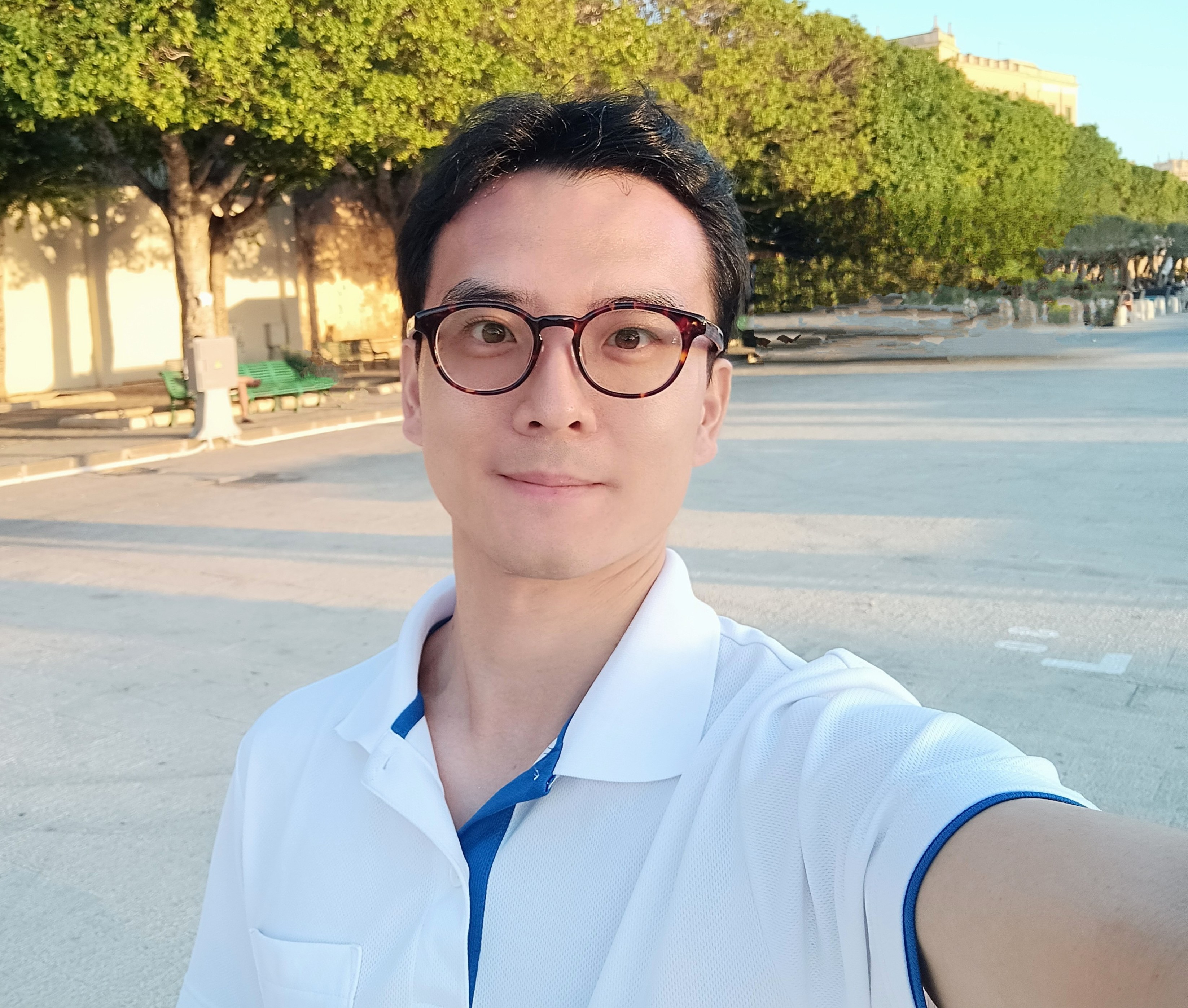
山田 彬尭 ( ヤマダ アキタカ )

Yamada, Akitaka

写真a

所属(所属キャンパス)

環境情報学部 ( 湘南藤沢 )

職名

准教授

HP

その他の所属・職名 【 表示 / 非表示

  • 政策・メディア研究科


論文 【 表示 / 非表示

  • Different short answers in Japanese: functionally similar but syntactically different

    Maeda M., Ikawa S., Yamada A., Miyamoto Y.

    Journal of East Asian Linguistics 34 ( 2 ) 319 - 341 2025年06月

    ISSN  09258558

     概要を見る

    In this paper, we deal with two hitherto unexplored short answers: Soo Anaphora Answer (SAA), where the pro-form soo is followed by the copula da/desu, and Copular Short Answer (CSA), where the null pro-form is followed by the copula. Although these constructions exhibit similar discourse functions, expressing the speaker’s consent to the preceding utterance, they exhibit different syntactic properties regarding (i) compatibility with a topic phrase and the subject, (ii) embedding, and (iii) requirement of a sentence-final particle. We account for these differences by claiming that the pro-form soo in SAA is situated in the complement of the Pred head that is lower than T, while the null pro-form of CSA is in the CP domain. We further claim that the null pro-form needs phonetic and semantic licensing by an overt head in the (CP and) SA domain.

  • Looking for default vocabulary insertion rules: Diachronic morphosyntax of the Japanese addressee-honorification system

    Yamada A.

    Glossa 8 2023年

     概要を見る

    As opposed to syntactic operations (such as Merge), morphology has been seen as the source of language variation. But few attempts have been made in the field of Distributed Morphology to explicitly and formally identify the role of postsyntactic rules in language change. By analyzing the change in the Japanese addressee-honorification system (Yamada 2019c), this paper proposes that the emergence of the new grammar — which seems to be an instance of a microparametric change in the Agree operation (Kayne 2000; 2005; Biberauer & Roberts 2012; Barbiers 2013) — is, in fact, explained as a morphological reanalysis: the reanalysis is caused by overgeneralization of vocabulary insertion rules resulting from abductive reasoning in pursuit of default rules. It is also suggested from a quantitative corpus survey using Time Series Analysis (the Dynamic Generalized Linear Mixed Effects Model) that the reanalysis is facilitated particularly in the configuration where the addressee-honorific marking is immediately followed by a sentence-final particle.

  • Dissertation Abstract: The Syntax, Semantics and Pragmatics of Japanese Addressee-Honorific Markers

    Yamada A.

    Ki Kunstliche Intelligenz 35 ( 3-4 ) 385 - 389 2021年11月

    ISSN  09331875

     概要を見る

    This dissertation is a case study of filling the gap between the two disciplines about human inference systems: theoretical linguistics and statistics. The main linguistic instance examined in this study is honorificity, in particular honorificity encoded by the Japanese addressee-honorific marker (AHM) -mas. Its linguistic properties and its effect on our inference are given a systematic explanation, in such a way that the traditions of statistics and theoretical linguistics are both maximally respected. For the morphosyntax, -mas is distributed in an unexpected position. It is proposed that this is due to an agreement. For the inference, the dynamicity is modeled as a Bayesian update, and the trigger of the update is the denotation amenable to the proposal of the previous linguistic literature.

  • A Persona-Based Analysis of Politeness in Japanese and Spanish

    Yamada A., Donatelli L.

    Lecture Notes in Computer Science Including Subseries Lecture Notes in Artificial Intelligence and Lecture Notes in Bioinformatics 12758 LNAI   129 - 144 2021年

    ISSN  03029743

     概要を見る

    We present descriptive accounts of ‘politeness’ in Japanese and Spanish by analyzing Japanese subject- and addressee-honorifics and Spanish pronominal addressee forms. Our accounts focus on inter- and intra-speaker variation in the use of these expressions. Observing this variation, we ask the question of how expressive content interacts with context. We develop a model of Bayesian Dynamic Pragmatics [26], and propose an algorithm for how the use of a politeness-oriented marker contributes to the dynamic creation of the speaker’s persona or publicized self-image. Our model captures multiple pragmatic factors that impact politeness-usage and persona simultaneously. As such, it is designed to be extended and explain comparable phenomena in other languages that employ politeness-oriented expressions.

  • Honorific (mis)matches in allocutive languages with a focus on Japanese

    Kaur G., Yamada A.

    Glossa 44 ( 1 )  2021年

     概要を見る

    This paper examines honorific mismatches between the allocutive marker and a 2P pronoun within a clause in Japanese. Unlike allocutive languages such as Tamil, Punjabi, Magahi, among others, which require obligatory matching in honorificity (and phi-features) between the allocutive marker and a 2P pronoun in a clause, Japanese allows the honorific allocutive marker to also occur with a non-honorific 2P pronoun. These mismatching structures can be interpreted both literally and sarcastically. We provide a two-step analysis to explain such mismatches: first, we claim that 2P pronouns in Japanese are lexical items, which cannot participate in syntactic binding to inherit their honorific features from a left-peripheral honorific head (e.g., c). Instead, they enter syntax with pre-specified honorific information. Allocutive markers, by contrast, obtain their honorificity in syntax, typically via agreement. Consequently, nothing in syntax forces matching between 2P pronouns and allocutive markers. Secondly, mismatching instances are also not ruled out in the pragmatic component because the meanings encoded by the 2P pronouns and the allocutive marker in Japanese are not comparable, and contribute independently to the meaning of the entire sentence. The honorific information encoded in pronouns is the speaker’s positive/negative attitude towards the addressee based on his/her evaluation of the addressee, while the allocutive marker encodes the speaker’s intent to be polite, irrespective of the evaluation of the addressee, who may even remain unidentified. It is possible for these two meanings to be expressed simultaneously in select conversational setups, leading to felicitous mismatching structures in the language.

競争的研究費の研究課題 【 表示 / 非表示

  • コーパス言語学と実験言語学の統合:敬語の確率的構文交替を事例に

    2022年04月
    -
    2027年03月

    山田 彬尭, 基盤研究(C), 補助金,  研究代表者


担当授業科目 【 表示 / 非表示

  • アカデミックプロジェクト(第二言語習得と外国語教育の科学)

    2025年度

  • 研究会B

    2025年度

  • プロジェクト英語A

    2025年度

  • 修士研究会

    2025年度

  • 語彙意味論

    2025年度

全件表示 >>