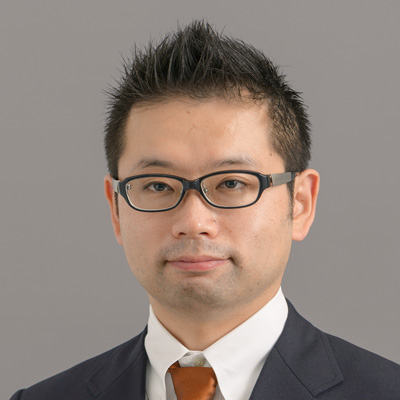
Miyata, Shogo

写真a

Affiliation

Faculty of Science and Technology, Department of Mechanical Engineering ( Yagami )

Position

Professor

Related Websites

External Links

Career 【 Display / hide

  • 2003.10
    -
    2004.03

    東京大学大学院工学系研究科21世紀COEリサーチアシスタント

  • 2003.10
    -
    2004.03

    東京大学大学院工学系研究科21世紀COEリサーチアシスタント

  • 2004.04
    -
    2005.03

    東京大学大学院工学系研究科助手

  • 2004.04
    -
    2005.03

    東京大学大学院工学系研究科助手

  • 2004.04
    -
    2011.03

    産業技術総合研究所招聘型客員研究員

display all >>

Academic Background 【 Display / hide

  • 1999.03

    The University of Tokyo, Faculty of Engineering, 機械工学科

    University, Graduated

  • 2001.03

    The University of Tokyo, Graduate School, Division of Engineering, 機械工学専攻

    Graduate School, Completed, Master's course

  • 2004.03

    The University of Tokyo, Graduate School, Division of Engineering, 機械工学専攻

    Graduate School, Completed, Doctoral course

Academic Degrees 【 Display / hide

  • 博士(工学), The University of Tokyo, Coursework, 2004.03


Research Areas 【 Display / hide

  • Manufacturing Technology (Mechanical Engineering, Electrical and Electronic Engineering, Chemical Engineering) / Mechanics of materials and materials

  • Life Science / Biomedical engineering (Biomedical Engineering/Biological Material Studies)

Research Keywords 【 Display / hide

  • Biomechanics

  • Tissue engineering

  • Biophysical engineering

  • On-chip cell screening system

Research Themes 【 Display / hide

  • Development of Biocompatible Flexible Electrode using Conductive Polymer, 

    2013.04
    -
    Present

  • Response of human skin fibroblast to stretch in wound healing process using a novel three-dimensional culture model, 

    2012.12
    -
    Present

  • Fundamental study of platelet diagnosis by dielectrophoretic phenomena, 

    2012.04
    -
    2015.03

  • In vitro formation of the neural network using the response of cells to electrical environment, 

    2011.04
    -
    Present

  • Effect of UV/ozone surface modification on proliferation of embryonic stem cells, 

    2011.04
    -
    2014.03

display all >>

Proposed Theme of Joint Research 【 Display / hide

  • 細胞チップ(皮膚,神経,毛髪組織,など)を用いた対象薬品および物質のスクリーニングテスト

    Interested in joint research with industry (including private organizations, etc.),  Desired form: Funded Research

  • 細胞チップ(皮膚,脂肪,神経)による創薬スクリーニングデバイスの開発

    Interested in joint research with industry (including private organizations, etc.),  Desired form: Funded Research, Cooperative Research


Books 【 Display / hide

  • 技術予測レポート2023(上)健康寿命の延伸を目指す日本の技術編

    株式会社日本能率協会総合研究所, 2013.12

    Scope: 第3章 治療機器・再生医療

  • Tissue Regeneration - From Basic Biology to Clinical Application

    S. Miyata, INTECH, 2012.03

    Scope: pp.473-488

  • Biomaterials in Asia

    S. Miyata, K. Homma, T. Numano, T. Ushida, T. Tateishi, World Scientific Pub., 2009.01

    Scope: pp.482-493

  • 立石科学技術振興財団助成研究成果集

    MIYATA Shogo, 立石科学技術振興財団, 2009

  • 中谷電子計測技術振興財団年報

    MIYATA Shogo, 中谷電子計測技術振興財団, 2008.08

    Scope: pp.67-70

display all >>

Papers 【 Display / hide

  • Centrifugal Fiber-Spinning Device Using Two Pairs of Counter-Facing Syringes for Fabricating Composite Micro/Nanofibers and Three-Dimensional Cell Culture.

    Shinagawa A, Miyata S

    Polymers 18 ( 1 )  2025.12

    Accepted

     View Summary

    Biomimetic scaffolds are required in tissue engineering to provide structural support as well as promote cell adhesion, proliferation, and differentiation. Fibrous scaffolds composed of micro- and nanofibers replicate the architecture of the native extracellular matrix. Electrospinning is widely used for fabricating nanofibers; however, constructing fibrous scaffolds that integrate multiple fiber scales into a single structure is difficult. We addressed this issue by developing a fiber-spinning device using two pairs of counter-facing syringes that simultaneously produce micro- and nanofibers under different processing conditions. Poly(ε-caprolactone) solutions are ejected through needle-type nozzles via centrifugal force, and fiber diameter is controlled by adjusting the polymer concentration and nozzle diameter. We fabricated scaffolds with the proposed device, which exhibited a random three-dimensional fibrous network in which microfibers and nanofibers were homogeneously integrated. C2C12 myoblasts cultured on the composite scaffolds strongly adhered to the fibrous network, remained viable, and extended along the fibers to form multinucleated cells within the structure. The developed system produced composite micro/nanofiber scaffolds with tunable morphology and biocompatibility, providing a platform for fibrous tissue engineering applications.

  • Discrimination Between Normal Skin Fibroblasts and Malignant Melanocytes Using Dielectrophoretic and Flow-Induced Shear Forces.

    Ojima Y, Takahashi Y, Miyata S

    Micromachines 16 ( 11 )  2025.10

    Accepted,  ISSN  2072-666X

     View Summary

    Cell analysis is vital in clinical diagnostics and cell engineering research. Among the various analytical techniques, dielectrophoresis (DEP) is a particularly promising label-free method for distinguishing biological particles, which eliminates the need for fluorescent dyes or magnetic beads. In this study, we present a high-precision single-cell analysis system based on the evaluation of DEP forces in a controlled microfluidic flow environment. The system integrates a microfluidic chamber equipped with an electrode array to exert DEP forces and flow-induced shear forces to facilitate force balance analysis. We quantitatively characterized the DEP response to successfully discriminate between healthy skin cells and cancer cells using the proposed DEP-based cell-sorting platform. The proposed system successfully distinguished between these cell types even when their dielectrophoretic properties were similar, highlighting its potential for sensitive and selective cell classification in biomedical applications.

  • Profiling the effect of low frequency mechanical vibration on the metabolic and oxidative stress responses of A431 carcinoma.

    Anggayasti WL, Imashiro C, Morikura T, Miyata S, Funahashi A, Takemura K

    FEBS open bio 15 ( 8 ) 1365 - 1375 2025.08

    Accepted,  ISSN  2211-5463

     View Summary

    Mechanomedicine represents a potential biocompatible method in cancer therapy. In particular, the use of low-frequency mechanical vibration previously proved to trigger apoptosis of the human epidermoid carcinoma A431 cell line. In this study, we further characterized the metabolic and oxidative stress responses triggered by 1 h of 20 Hz mechanical vibration stimulus to A431 prior to cell death. Our results indicate that cell death may be related to the decrease of glucose consumption rate and the higher expression of reactive oxygen species right after mechanical stimulation (0 h). The overexpression of HMGB1 and HSP70 coding genes signified the increase of A431 cell stress. However, HMGB1 and HSP70 expression decreased at 24 h after mechanical vibration, along with the progression of cell death. We also observed cell morphology changes on A431 cells following vibration which might be indicative of A431 death by apoptosis. The emergence of these stress responses suggests that several pathways are connected to promote cancer cell death. The discovery of A431 cellular stress symptoms which lead to apoptotic death may clarify the usefulness of mechanical vibration in cancer treatment as a novel application of biomechanical manipulation.

  • Effects of Clump Size on the Pluripotency and Proliferation in the Passaging Process of Mouse Induced Pluripotent Stem Cells

    Ishii K., Abe K., Sakamoto T., Hasebe H., Miyata S.

    Processes 12 ( 11 )  2024.11

    Accepted

     View Summary

    Induced pluripotent stem cells (iPSCs) are a promising cell source because of their pluripotency and self-renewal abilities. However, there is a risk of pluripotency loss during cell expansion. Particularly, cell passaging is associated with a higher risk of decreasing cell quality. There are two iPSC passaging methods: single-cell and clump passaging. Single-cell passaging is a rapid and simple method for cell manipulation, whereas clump passaging is superior for maintaining iPSC pluripotency. Therefore, clump passaging is a robust method for expanding iPSCs while maintaining their pluripotency. However, clump size control during clump passaging is difficult because colony fragmentation is performed manually by pipetting the colonies detached from the cell culture substrates. In this study, the effect of pipetting on iPSC colony fragmentation was evaluated and the relationship between iPSC clump size and pluripotency was clarified. An automated pipetting device was developed to standardize the clump passage process. The effect of clump size on the pluripotency and proliferative capacity of mouse iPSCs was investigated. Clump size was controlled by varying the number of pipetting cycles, and pluripotency and proliferation were assessed via alkaline phosphatase staining and flow cytometry. Our results revealed that a decrease in clump size corresponded to an increase in cell proliferation, while pluripotency maintenance was optimized under specific clump sizes. These results underscore the significance of clump size for stem cell quality, emphasizing the need for a balanced approach to maintain pluripotency while fostering proliferation in the cell expansion culture for iPSCs.

  • Effect Of Mechanical Micro-Environment On Growth Of Multilayered Cell Spheroid Of Cervical Cancer And Vascular Endothelial Cells

    Koizumi, G; Akiyama, R; Miyamoto, M; Miyata, S

    TISSUE ENGINEERING PART A 30 ( 15-16 ) S200 - S200 2024.08

    Accepted,  ISSN  1937-3341

display all >>

Papers, etc., Registered in KOARA 【 Display / hide

Reviews, Commentaries, etc. 【 Display / hide

  • Biocompatibility of materials : mechanical compatibility of biomaterials

    Shogo Miyata

    Pharm stage 16 ( 10 ) 53 - 57 2017.01

    Article, review, commentary, editorial, etc. (scientific journal), Single Work

  • Non-invasive assessment technology for tissue-engineered material

    Shogo Miyata

    Pharm stage (技術情報協会)  17 ( 5 ) 8 - 12 2017

    Article, review, commentary, editorial, etc. (scientific journal), Single Work,  ISSN  1346-3918

  • 微粒子ピーニングによる細胞適合表面の創製とその応用

    小茂鳥 潤, 倉科佑太, 村井一恵, 宮田昌悟, 竹村研治郎, 小山尹誉

    砥粒加工学会誌 57 ( 6 ) 349 - 352 2013

    Article, review, commentary, editorial, etc. (scientific journal), Joint Work

Presentations 【 Display / hide

  • マウスES 細胞の剥離プロセスが再播種後の多能性維持 に与える影響

    植野馨太, 宮田昌悟, 阿部公揮, 坂本禎志, 栗原 隆

    [Domestic presentation]  the 34th Bioengineering Conference 2022 Annual Meeting of BED/JSME, 

    2022.06

    Poster presentation

  • 機械的振動刺激が皮膚由来細胞の老化現象に与える影響

    石原美優,宮田昌悟

    [Domestic presentation]  the 34th Bioengineering Conference 2022 Annual Meeting of BED/JSME, 

    2022.06

    Poster presentation

  • Effect of Hydrogel Stiffness on Growth and Invasion Process of Tumor Spheroid

    R Nishi, Y Oda, T Morikura, S Miyata

    [International presentation]  the 11th Asian-Pacific Conference on Biomechanics (AP Biomech 2021), 

    2021.12

    Poster presentation

  • Effect of Mechanical Stimulation on Migration Mode of Malignant Melanoma

    R Yoshida, K Harada, T Morikura, S Miyata

    [International presentation]  the 11th Asian-Pacific Conference on Biomechanics (AP Biomech 2021), 

    2021.12

    Poster presentation

  • Generation of Cell Spheroid Using Hanging Drop Culture Combined with Orbital Shaking

    S Sato, S Miyata

    [International presentation]  the 11th Asian-Pacific Conference on Biomechanics (AP Biomech 2021), 

    2021.12

    Poster presentation

display all >>

Research Projects of Competitive Funds, etc. 【 Display / hide

  • 癌細胞の初期悪性化・浸潤を左右する4次元力学場の探索と浸潤抑制治療への展開

    2022.04
    -
    2025.03

    日本学術振興会, 科学研究費補助金, 基盤研究B(一般), Research grant, Principal investigator

  • 細胞配置と力学的刺激の複合効果がもたらす毛髪および皮膚附属器官の完全生体外再生

    2017.04
    -
    2020.03

    Grant-in-Aid for Scientific Research, Research grant, No Setting

  • プラズマ・ラジカル複合反応を用いた生体分子疑似構造を有するヒトiPS培養基材

    2017.04
    -
    2018.03

    文部科学省, 橋渡し研究加速ネットワークプログラム(シーズA), Research grant, Principal investigator

  • プラズマ・ラジカル複合反応を用いた生体分子疑似構造を有するヒトiPS培養基材

    2016.12
    -
    2017.03

    文部科学省, 橋渡し研究加速ネットワークプログラム(シーズA), Research grant, Principal investigator

  • 酸素ラジカル表面改質基材を用いたヒトiPS 細胞の完全単独培養システムと再生心筋細胞移植への展開

    2015.09
    -
    2016.03

    文部科学省, 橋渡し研究加速ネットワークプログラム(シーズA), Research grant, No Setting

display all >>

Works 【 Display / hide

  • 未来の起源

    MIYATA Shogo

    2013.04
    -
    Present

    Other, Single

  • ES細胞安定回収 フィーダ細胞分離 誰でも素早く

    S. Miyata

    2012.08
    -
    Present

    Other, Single

  • 骨や靱帯を再生させる技術って?

    MIYATA Shogo

    2011.07
    -
    Present

    Other, Single

  • 慶大、不良・良好な細胞傷つけずに分離する方法開発

    S. Miyata

    2011.07
    -
    Present

    Other, Single

  • 人のカラダは作ることができるか?

    MIYATA Shogo

    2010.08
    -
    Present

    Other, Single

display all >>

Intellectual Property Rights, etc. 【 Display / hide

  • 細胞担持用基材及びその製造方法

    Date applied: PCT/JP2016/000981  2016.02 

    Patent, Joint

  • 細胞担持用基材及びその製造方法

    Date applied: 特願2015-35439  2015.02 

    Patent, Joint

  • 細胞操作装置

    Date applied: 2012-098304  2012.04 

    Patent, Joint

  • METHOD FOR ACCUMULATING CELLS

    Date applied: US-20120064595-A1  2012 

    Patent, Joint

  • 細胞集積法

    Date applied: 2010-204989  2010.09 

    Patent, Joint

Awards 【 Display / hide

  • Outstanding Student Presentation

    森倉峻, 徳岡雄大, 山田貴大, 板井駿, 長友竜帆, 原田慧吾, 三木則尚, 尾上弘晃, 舟橋啓, 宮田昌悟, 2022.01, 日本機械学会バイオエンジニアリング部門, 高速ラベルフリー三次元細胞形状計測に向けた深層学習に基づくシングルショット計算顕微鏡法

    Type of Award: Award from Japanese society, conference, symposium, etc.

  • Young Investigator’s Award

    森倉 峻, 宮田 昌悟, 2019.06, 日本生体医工学会, 間欠的圧縮変形刺激がin vitro三次元悪性黒色腫モデルの細胞増殖を伴う浸潤プロセスに与える影響

    Type of Award: Award from Japanese society, conference, symposium, etc.

  • Best Paper Award

    Y. Kurashina, I. H. M. Hashim, K. Takemura, S. Miyata, J. Komotori, 2015.11, ASME, Resonance Vibration and Temperature Modulation Enhances Cell Detachment from Cultivation Substrate

    Type of Award: International academic award (Japan or overseas),  Country: United States

  • 平成23年度日本材料学会 生体・医療材料部門 研究奨励賞

    MIYATA Shogo, 2012.03

    Type of Award: Award from Japanese society, conference, symposium, etc.

  • 日本機械学会バイオエンジニアリング部門瀬口賞

    MIYATA Shogo, 2012.01, 日本機械学会, 再生軟骨および関節軟骨の非侵襲評価技術に関する研究

    Type of Award: Award from Japanese society, conference, symposium, etc.

display all >>


Courses Taught 【 Display / hide

  • SPECIAL LECTURE SERIES ON MULTIDISCIPLINARY AND DESIGN SCIENCE

    2025

  • PHYSICS B

    2025

  • INTRODUCTION TO SCIENCE AND TECHNOLOGY

    2025

  • INTRODUCTION TO MATERIALS SCIENCE

    2025

  • INDEPENDENT STUDY ON INTEGRATED DESIGN ENGINEERING

    2025

display all >>

Courses Previously Taught 【 Display / hide

  • 図形情報処理

    慶應義塾大学理工学部

    2018.04
    -
    2019.03

  • 機械工学実験

    慶應義塾大学理工学部

    2018.04
    -
    2019.03

  • 機械工学創造演習

    慶應義塾大学理工学部

    2018.04
    -
    2019.03

  • 情報処理同実習

    慶應義塾大学理工学部

    2018.04
    -
    2019.03

  • 形状情報の表現

    Keio University

    2017.04
    -
    2018.03

    Autumn Semester, Laboratory work/practical work/exercise

display all >>


Memberships in Academic Societies 【 Display / hide

  • 日本機械学会, 

    2011.04
    -
    Present
  • 化学工学会, 

    2011.04
    -
    2013.03
  • 日本材料学会, 

    2009.04
    -
    Present
  • 日本バイオレオロジー学会, 

    2007
    -
    Present
  • American Society of Mechanical Engineers (ASME), 

    2005
    -
    Present

display all >>

Committee Experiences 【 Display / hide

  • 2012.04
    -
    2014.03

    運営委員, 日本機械学会 バイオエンジニアリング部門

  • 2011.04
    -
    2014.03

    関東支部代議員, 日本機械学会

  • 2011.04
    -
    2013.03

    編集委員, 化学工学誌

  • 2010.04
    -
    Present

    会計幹事, 日本材料学会 生体・医療材料部門

  • 2009.04
    -
    2010.03

    庶務幹事, 日本材料学会 生体・医療材料部門