
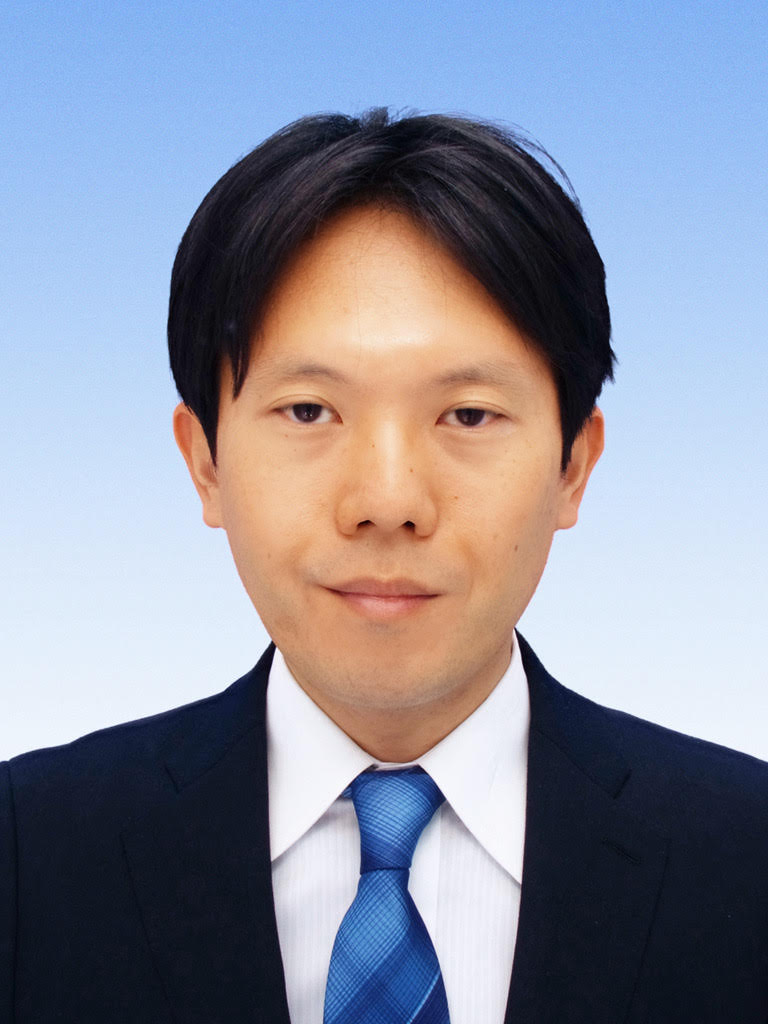
Kagoya, Yuki

写真a

Affiliation

School of Medicine, Institute for Advanced Medical Research Division of Tumor Immunology ( Shinanomachi )

Position

Professor

E-mail Address

E-mail address

Related Websites

Contact Address

Shinanomachi 35, Shinjuku, Tokyo, Japan

Telephone No.

+81-3-5843-6174

Fax No.

+81-3-5843-6177

Profile 【 Display / hide

  • Yuki Kagoya received his MD at the University of Tokyo in 2007 and completed clinical training for Internal Medicine, Hematology & Medical Oncology, and Transplantation Medicine. Dr. Kagoya was then involved in basic research on leukemia initiating cells during his PhD training. After obtaining PhD, he joined Dr. Naoto Hirano’s laboratory at Princess Margaret Cancer Centre, Toronto to be dedicated to research on cancer immunology and immunotherapy (2014-2018). He served on Aichi Cancer Center Research Institute as the Principal Investigator for 3 years prior to his recruitment to Keio University.

Career 【 Display / hide

  • 2007.04
    -
    2009.03

    Kanto Rosai Hospital, 内科

  • 2013.04
    -
    2013.09

    The University of Tokyo, Faculty of Medicine University Hospital Heamatology and Oncology, Research Fellow

  • 2013.10
    -
    2014.05

    The University of Tokyo, Faculty of Medicine University Hospital Heamatology and Oncology, Assistant Professor

  • 2014.06
    -
    2018.05

    Princess Margaret Cancer Centre, Tumor Immunotherapy Program, Research Fellow

  • 2018.06
    -
    2019.09

    The University of Tokyo, Faculty of Medicine University Hospital, Assistant Professor

display all >>

Academic Background 【 Display / hide

  • 2001.04
    -
    2007.03

    The University of Tokyo, Faculty of Medicine, 医学科

  • 2009.04
    -
    2013.03

    The University of Tokyo, Graduate School of Medicine

Academic Degrees 【 Display / hide

  • Ph.D., The University of Tokyo, Coursework, 2013.03


Research Areas 【 Display / hide

  • Life Science / Immunology (cancer immunology; cancer immunotherapy; cell therapy; molecular cell biology, hematology and medical oncology)

Research Keywords 【 Display / hide

  • Cancer immunotherapy

  • Cancer immunology


Papers 【 Display / hide

  • 特集 腫瘍免疫とミトコンドリア ミトコンドリアリプログラミングによるCAR-T細胞療法の最適化

    近藤 泰介, 籠谷 勇紀

    医学のあゆみ (医歯薬出版)  296 ( 11 ) 1008 - 1013 2026.03

    Last author, Corresponding author, Accepted,  ISSN  00392359

  • Novel cancer immunotherapy using cell-derived membrane vesicles loaded with multiple immunomodulatory factors

    ITO Yusuke, OHTA Seiichi, KAGOYA Yuki

    Rinsho Ketsueki (The Japanese Society of Hematology)  67 ( 1 ) 3 - 10 2026

    Last author, Corresponding author, Accepted,  ISSN  04851439

     View Summary

    <p>T細胞に対する二重特異性抗体(BsAb)はCD3抗体を介して抗腫瘍活性をT細胞に賦与するが,長期的な治療効果は未だ不十分である。T細胞に最適な抗腫瘍効果を誘導するには複合的なシグナルが必要であり,我々はBsAb,共刺激分子,サイトカインなどの分子群を同時に表面に搭載したナノサイズの細胞膜由来膜小胞の作製技術を確立した。B細胞性造血器腫瘍に対し,CD19を標的としたBsAbに加え,共刺激分子(CD80,4-1BBL),T細胞の増殖・長期生存に関わるサイトカイン(IL-7,IL-15)を搭載した膜小胞は,T細胞に抗原特異的な抗腫瘍活性を効率よく誘導した。また抗PDL1抗体,CTLA4抗体,IL-12,IL-18など腫瘍微小環境に作用する分子を搭載し,腫瘍内マクロファージの改変や免疫抑制シグナルの解除を行えることを示した。この手法は従来の抗体医薬と比較して多面的な免疫制御シグナルを誘導できる。</p>

  • Improving efficacy and safety of CAR-T cell therapy by manipulating cytokine signaling

    Kataoka Mirei, Ito Yusuke, Kagoya Yuki

    Japanese Journal of Transplantation and Cellular Therapy (Japanese Society for Transplantation and Cellular Therapy)  15 ( 1 ) 7 - 14 2026

    Last author, Corresponding author, Accepted

     View Summary

    <p> Chimeric antigen receptor (CAR)-engineered T cell therapy has shown significant efficacy against hematological malignancies; however, its long-term efficacy remains suboptimal. Furthermore, solid tumors are highly resistant to CAR-T cell therapy. Cytokine signaling is important for anti-tumor activity of T cells. Modulating cytokine signaling can improve the efficacy and safety of CAR-T cell therapy. We will review representative studies on manipulating CAR-T cell functions using cytokine signaling.</p>

  • Computational optimization of chimeric antigen receptor

    Taisuke Kondo, Chisato Umehara, Yuki Kagoya

    Molecular Therapy (Elsevier BV)  33 ( 10 ) 4680 - 4681 2025.10

    Last author, Corresponding author, Accepted,  ISSN  1525-0016

  • Efficient expansion of tumor-infiltrating lymphocytes from gynecologic cancer

    Tetsuya Matsukawa, Tsunenori Ouchida, Taeko Hayakawa, Toshiaki Yoshikawa, Yusuke Ito, Hitomi Kasuya, Chisato Umehara, Satoshi Inoue, Tatsuyuki Chiyoda, Hiroshi Nishio, Wataru Yamagami, Waki Hosoda, Shiro Suzuki, Yuki Kagoya

    The Journal of Immunology (Oxford University Press (OUP))  214 ( 12 ) 3618 - 3633 2025.09

    Last author, Corresponding author, Accepted,  ISSN  0022-1767

     View Summary

    Abstract

    Tumor-infiltrating lymphocyte (TIL) therapy is a type of adoptive immunotherapy potentially applicable to many types of solid tumors. Although gynecologic malignancies are promising targets for TIL therapy, its objective efficacy has not been established. Current TIL culture typically involves incubation of dissociated samples with high-dose IL-2 (HD-IL2) for weeks to enrich tumor-reactive T cells. While this protocol has been successfully used for melanoma TIL, it has not necessarily been optimized for other cancers. Here we investigated the method of efficiently expanding TILs derived from patients with gynecological cancers. TILs were incubated with HD-IL2 (HD-IL2-TILs) or stimulated with K562 cells expressing anti-CD3 mAb and CD80 (αCD3/CD80-TILs). We found that the αCD3/CD80-TILs showed significantly better proliferation than HD-IL2-TILs. The TIL populations that predominantly expanded upon αCD3/CD80 stimulation expressed high levels of PD-1 and CD28. CD28 co-stimulation was essential to overcome PD-1–mediated signals for growth suppression. We also identified DUSP4 as a negative regulator of TIL proliferation by downregulating ERK phosphorylation. The αCD3/CD80-TILs were reactive to tumor cells as shown by IFN-γ secretion and CD107a expression. Moreover, the αCD3/CD80-TILs were efficiently transduced with a chimeric cytokine receptor that we had previously developed to provide constitutive IL-7 signaling, resulting in superior in vivo persistence and antitumor effects without exogenous cytokine support in mouse models. Collectively, this study shows that direct stimulation of TILs with anti-CD3 mAb and CD28 co-stimulation achieves efficient expansion of tumor-reactive TILs. Genetic engineering of cytokine signaling in TILs may further enhance TIL functions and replace cytokine administration after TIL infusion.

display all >>

Papers, etc., Registered in KOARA 【 Display / hide

Reviews, Commentaries, etc. 【 Display / hide

display all >>

Presentations 【 Display / hide

  • Reprogramming antitumor T cells to achieve a long-lived memory phenotype

    Mirei Kataoka, Yusuke Ito, Yuki Kagoya

    The 54th Annual Meeting of the Japanese Society for Immunology, 

    2025.12

    Oral presentation (general)

  • Improving CAR-T cell therapy based on the molecular understanding of resistance mechanisms

    Yuki Kagoya

    The 54th Annual Meeting of the Japanese Society for Immunology, 

    2025.12

    Symposium, workshop panel (nominated)

  • 二重特異性抗体療法の基礎知識

    Yuki Kagoya

    エプキンリWEBセミナー, 

    2025.12

    Other

  • Reinforcing CAR-T/NK cell function based on molecular profiles

    Yuki Kagoya

    シン・モダリティセミナー 細胞治療編, 

    2025.12

    Public lecture, seminar, tutorial, course, or other speech

  • Understanding the molecular mechanisms of CAR-T Cell therapy failure

    Yuki Kagoya

    The 53rd International Symposium of Princess Takamatsu Cancer Research Fund, 

    2025.11

    Symposium, workshop panel (nominated)

display all >>

Research Projects of Competitive Funds, etc. 【 Display / hide

  • Balancing memory and effector T cell function through epigenetic modification

    2024.06
    -
    2026.03

    日本学術振興会, 挑戦的研究(萌芽), 挑戦的研究(萌芽), Principal investigator

  • 複合的な免疫応答を誘導できる抗腫瘍エクソソー ムの開発

    2024.04
    -
    2026.03

    国立研究開発法人日本医療研究開発機構(AMED), 橋渡し研究プログラム 慶應義塾拠点 シーズA, Principal investigator

  • Development of CAR-NK cell therapy with durable response through genetic manipulation

    2023.04
    -
    2026.03

    Japan Society for the Promotion of Science, Grants-in-Aid for Scientific Research, Grant-in-Aid for Scientific Research (B), Principal investigator

     View Summary

    キメラ抗原受容体(CAR)導入NK細胞は、造血器腫瘍に対しては臨床試験で有望な結果が報告されているものの、標準的な製造プロトコール、基本的な安全性、治療効果についてのデータは十分ではない。従来の理解と異なり、NK細胞にもT細胞に類似したメモリー様状態が存在し、その背景にある遺伝子発現、エピゲノムプロファイルの変化が明らかとなってきた。そこで本研究ではNK細胞のメモリー形成に中心的に関わる転写ネットワーク、エピジェネティックプロファイルを特定の遺伝子改変により再現することで、長期生存能・持続的な治療効果を誘導できるCAR-NK細胞療法を開発することを目標とした。
    本年度は、CAR-NK細胞に長期生存能を付与する遺伝子改変方法の探索を進め、有望な遺伝子標的を同定することに注力した。健常人由来末梢血単核球、または臍帯血細胞よりCD56陽性NK細胞を単離した上で、解析に用いた。特にNK細胞が終末分化状態に至る過程で発現変化を来す遺伝子に着目して、それらの遺伝子の過剰発現、及びCRISPR/Cas9によるノックアウトを行った際の既往変化をin vitroで解析した。その結果、遺伝子Aのノックアウトにより、NK細胞の長期的増殖能が顕著に向上することを見出した。細胞傷害活性には大きな変化がなかった。遺伝子AノックアウトCAR-NK細胞は、マスサイトメトリー解析においても広範な細胞表面抗原の発現変化を示し、またRNAシークエンスにおいてもコントロールNK細胞と比較して1500個程度の遺伝子で有意な発現変化が確認された。
    次年度以降は遺伝子AノックアウトCAR-NK細胞の持続的抗腫瘍効果をin vivoにおける実験系で評価する計画である。

  • The determination of T-cell fate by different tumor antigens and prevention of post-operative recurrence of lung cancer

    2022.04
    -
    2025.03

    Japan Society for the Promotion of Science, Grants-in-Aid for Scientific Research, Grant-in-Aid for Scientific Research (B), No Setting

  • Development of a combinatorial approach of antibody therapeutics and adoptive immunotherapy for cancer

    2021.07
    -
    2023.03

    Japan Society for the Promotion of Science, Grants-in-Aid for Scientific Research, Grant-in-Aid for Challenging Research (Exploratory), No Setting

     View Summary

    キメラ抗原受容体(CAR)導入T細胞は抗原特異的で高い細胞傷害効果を有するが、がん組織内における疲弊誘導などでそのエフェクター効果が減弱すること、及びがん細胞側の標的抗原の喪失などによる免疫逃避機構が働くことが問題である。
    本研究ではCARを通じたエフェクター効果のみならず、CAR-T細胞から、例えば二重特異性抗体などの抗体医薬品を遺伝子レベルで製造・分泌させることで、さらに細胞傷害効果を高めることを目指している。今年度は特定の標的抗原に注目して、分泌に用いる抗体の遺伝子配列について、主にシグナルペプチド、リンカー配列の検討を行った。標的抗原を発現するがん細胞株との共培養の実験系で、がん細胞に対する細胞傷害効果の誘導、培養上清中への薬剤の分泌濃度などの観点から、適した配列を決定した。同分子は抗原を発現しない細胞には作用せず、抗原特異性が付与されていることを確認した。また次年度以降に用いるマウス腫瘍モデルの確立を行った。免疫不全マウス(NSGマウス)に腫瘍細胞株を投与した上で、ヒトCAR-T細胞を輸注する実験系で、腫瘍の増生を抑制できることを確認した。さらに腫瘍量やCART細胞の投与量を調整してCART細胞のみでは腫瘍増生を制御できないプロトコールを設定した。
    次年度以降は複数の標的抗原を検討しながら、in vivoにおけるマウス腫瘍モデルで本治療システムが通常のCAR-T細胞と比較して優れた抗腫瘍効果を誘導できることを示す。同時に他臓器に対する毒性などを検証することで、特異性(安全性)の確認を行う。

display all >>


Courses Taught 【 Display / hide

  • ADVANCED MEDICAL RESEARCH

    2025

  • ADVANCED MEDICAL RESEARCH

    2025

  • ADVANCED MEDICAL RESEARCH: PRACTICE

    2025

  • ADVANCED MEDICAL RESEARCH: SEMINAR

    2025

  • IMMUNOLOGY

    2025

display all >>
